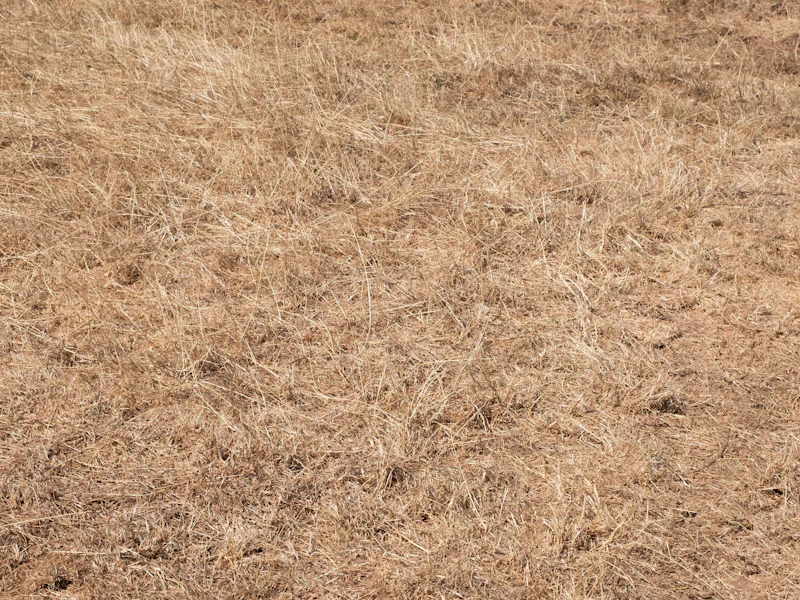
St. Augustine grass can turn brown because of drought stress, uneven irrigation, chinch bugs, turf disease, root damage, mowing injury, chemical injury, or normal seasonal dormancy. The fastest way to narrow the cause is to look at the pattern, check soil moisture, inspect the roots and stolons, and ask what changed before the browning started.
Brown turf is a symptom, not a diagnosis. Treating every brown patch with more water, fertilizer, fungicide, or insecticide can make the problem worse if the cause is different.
Start with the pattern, not the product
Walk the lawn and look at the whole affected area before focusing on individual blades. Ask:
- Is the browning uniform or patchy?
- Are the patches circular, irregular, or shaped like a sprinkler gap?
- Is the problem near pavement, on a slope, in shade, or in a low spot?
- Did it appear after mowing, fertilizing, spraying weeds, heavy rain, or extreme heat?
- Is the grass still firmly rooted?
These clues often reduce a long list of possible causes to two or three realistic ones.
Drought and uneven irrigation
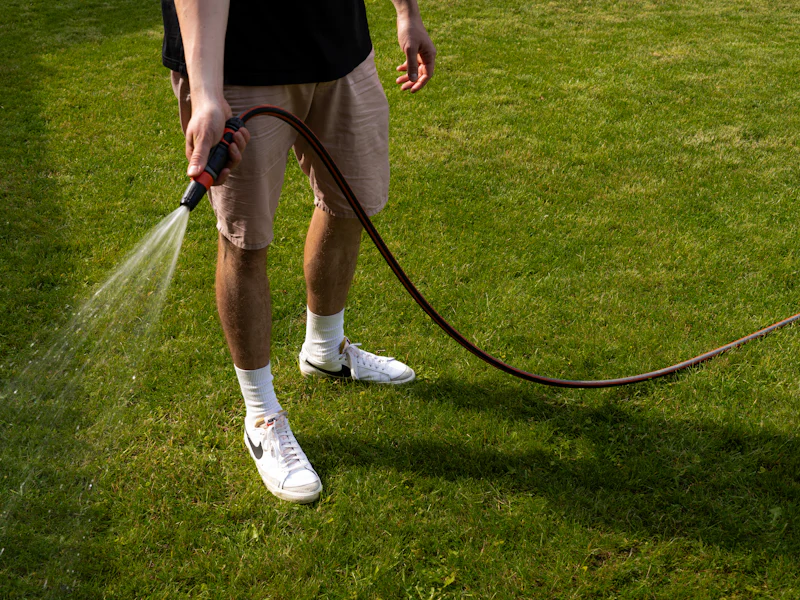
Texas A&M describes drought-stressed turf as wilted or blue-gray before it turns brown. St. Augustine needs supplemental water during dry periods, but established lawns are generally managed with deep, infrequent irrigation rather than constant shallow watering.
Check the root zone with a screwdriver or soil probe. If the soil is dry where the grass is brown but moist in nearby green turf, irrigation distribution may be the real issue.
Also run the sprinkler system and look for blocked heads, poor overlap, overspray onto pavement, or dry corners. Brown grass that closely matches a sprinkler pattern deserves an irrigation diagnosis before anything else.
Chinch bug damage
Chinch bugs are a major St. Augustine pest in Texas. Their damage often appears as irregular yellow-brown patches in hot, sunny areas, especially near sidewalks and driveways.
The strongest evidence is not the brown color. It is finding the insects at the transition between healthy and damaged turf.
Our Dallas guide to chinch bugs in St. Augustine grass explains how to confirm them before treating.
Large patch and other turf disease
Large patch can create circular or semicircular areas of declining St. Augustine, especially during cooler, moist conditions. Heavy irrigation and prolonged leaf wetness can increase disease pressure.
Disease becomes more likely when the seasonal timing, patch shape, and plant-tissue symptoms line up. Avoid assuming “brown patch” means a fungicide is needed without checking the pattern first.
Take-all root rot and other root problems
If St. Augustine is yellowing, thinning, and browning while roots are short, dark, weak, or rotten, take-all root rot or another root problem deserves attention.
Gently tug on the turf. Healthy St. Augustine should resist because its roots and stolons are attached. Turf that lifts easily can indicate root injury.
Mowing injury
St. Augustine performs best at a relatively high mowing height. Texas A&M recommends about 2.5 to 3.5 inches for most St. Augustine lawns.
Scalping removes too much green tissue at once and can expose brown stems and stolons. A dull mower blade can also shred leaf tips, giving the lawn a brownish cast.
If browning appeared immediately after mowing and follows the mower path rather than natural lawn patterns, inspect the cut quality before treating for pests or disease.
Fertilizer or herbicide injury
Too much soluble fertilizer can burn turf, especially when applied unevenly or under stressful conditions. Chemical injury can also occur when an herbicide is not labeled for St. Augustine or is applied when the turf is already stressed.
Look for:
- Straight lines or stripes that follow spreader passes.
- Sharp spray patterns.
- Damage beginning soon after a lawn application.
- Neighboring weeds or plants showing injury at the same time.
Do not add more fertilizer or another herbicide until the cause is clear.
Heat stress
Summer heat can increase water demand and magnify problems that were already present. A hot strip beside concrete may brown because of drought, poor irrigation coverage, chinch bugs, or a combination of all three.
Heat is usually a stress factor, not a complete diagnosis by itself.
Shade and competition from trees
St. Augustine is more shade tolerant than many warm-season grasses, but heavy shade can still reduce density and vigor. Under trees, the lawn may also compete with roots for water and nutrients.
Thin, weak turf in deep shade should not automatically be treated like a sunny brown patch.
Is the grass actually dead?
Brown leaves do not always mean the plant is dead. Check the stolons and crowns. If they are firm and show green tissue or new growth at the nodes, the grass may be stressed but alive.
Completely dead stolons will not recover by watering more. Those areas may eventually need plugs or sod after the original cause is corrected.
A practical diagnostic order
- Map the pattern.
- Check soil moisture.
- Run the sprinkler system.
- Inspect the active edge for chinch bugs.
- Check roots and stolons.
- Consider season and weather.
- Review recent mowing, fertilizer, and herbicide activity.
This order helps prevent unnecessary treatments and gives you evidence before you act.
When to widen the diagnosis
If one explanation does not fit all the symptoms, do not force it. St. Augustine can experience drought, disease, insects, and root stress at the same time.
Use the lawn care guides and Dallas lawn care hub to compare related problems before making a treatment decision.
Use the location of the brown grass as a shortcut
Where the damage appears can narrow the list before you do any treatment. Brown grass beside concrete points toward heat, dry soil, irrigation gaps, edging stress, or chinch bugs. Brown turf in a low spot raises drainage and root concerns. Thin brown grass under a tree points toward light, root competition, and moisture differences.
A location clue is not proof, but it helps you choose the next inspection instead of reaching for a product.
Brown grass in full sun
Check drought stress, irrigation distribution, heat exposure, and chinch bugs first.
Brown grass in shade
Check light level, soil moisture, root competition, mowing height, and disease pressure.
Brown grass after a lawn-care event
If browning follows mowing, fertilizing, weed control, or a heat wave, the timeline can be more useful than patch color. Compare the damage with mower paths, spreader passes, spray boundaries, or the area that experienced the most stress.
Dallas seasonal context can narrow the diagnosis
North Texas weather changes which causes are most plausible. Hot, dry summer conditions make drought stress, sprinkler gaps, heat load, and chinch bugs especially important. Cooler, moist transition periods increase concern for diseases such as large patch. Winter browning may simply be dormancy if the entire warm-season lawn is losing color together.
Use season as context, not as a substitute for inspecting the lawn.
What not to do when St. Augustine turns brown
- Do not automatically increase irrigation without checking the soil.
- Do not apply insecticide without confirming a damaging pest.
- Do not apply fungicide simply because the patch is brown.
- Do not add heavy nitrogen to stressed, dormant, saturated, or diseased turf.
- Do not replace sod until the original cause is understood.
When the lawn needs a second look
Reassess the diagnosis if the patch keeps expanding after the suspected cause is corrected, if roots continue deteriorating, or if different sections of the yard respond differently. A lawn can have more than one problem at the same time.
For persistent or confusing decline, a local extension office or turf diagnostic service can help evaluate a sample taken from the boundary between healthy and affected grass.