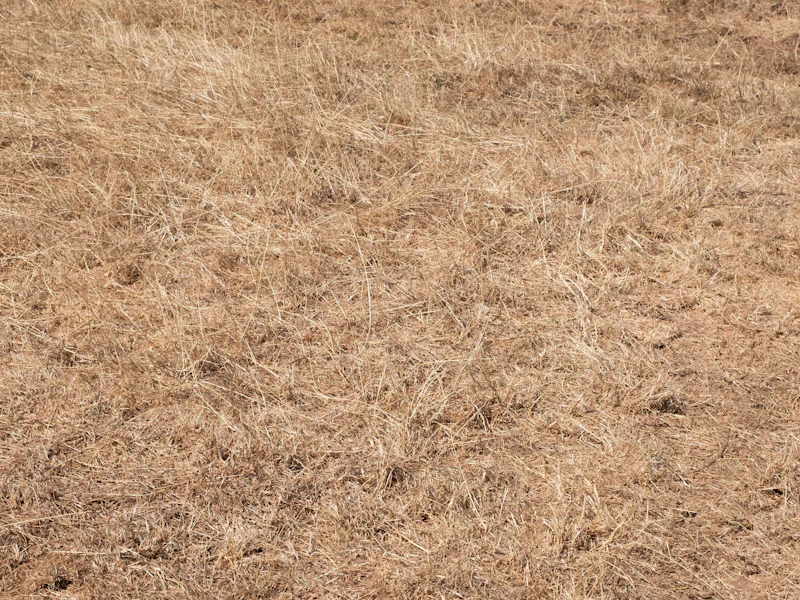
It is normal for old chinch bug damage to remain brown after a successful treatment. Dead grass cannot turn green again, and stressed living St. Augustine may need time to recover. What should stop is continued pest activity and outward expansion of new damage.
Normal: the original brown area is still visible
Pesticide treatment controls insects; it does not repair dead plant tissue. A brown center can remain even after the active infestation is reduced.
Do not use color alone to decide whether treatment failed.
Normal: recovery is uneven
The edge of a damaged area may contain a mix of living, stressed, and dead St. Augustine. Some sections can produce new growth while others remain bare.
That uneven appearance can persist while healthy stolons begin filling small gaps.
Normal: the lawn takes longer than the insects to respond
Texas A&M recommends monitoring treated sites every 3 to 5 days for at least two weeks. The pest population can change before the lawn shows obvious visual improvement.
Not normal: the damage edge keeps expanding
If new yellowing appears beyond the original boundary and the patch continues growing, inspect for live chinch bugs.
Continued expansion can mean:
- The infestation is still active.
- The treated area did not cover the full active zone.
- The original diagnosis was incomplete.
- A second problem such as drought or disease is present.
Not normal: high numbers of active chinch bugs remain
Repeat visual inspection or a flotation test in the transition zone.
Do not automatically reapply pesticide. Check the product label for timing and use limits, and reconsider the diagnosis and application conditions.
Not normal: the turf develops strong root symptoms
If roots become short, black, rotten, or turf lifts easily, chinch bugs may not be the only issue. Root disease or root-feeding pests should be investigated.
Why watering may not change the old brown patch
Appropriate irrigation supports living turf, but dead tissue cannot be revived. Keep the root zone adequately moist for St. Augustine without saturating it.
Fix sprinkler coverage problems that may have contributed to the original stress.
Why heavy fertilizer is not a recovery shortcut
Excess nitrogen can create weak, lush growth and contribute to thatch. Use normal seasonal fertility instead of trying to force damaged turf green.
When should repair start?
Begin repair after:
- Active chinch bugs are controlled.
- The damage edge is stable.
- Irrigation is functioning correctly.
- Other root or disease problems have been considered.
Then decide whether living St. Augustine can fill the area or whether plugs or sod make more sense.
How to document improvement
Take photos from the same position every few days and mark the damage boundary. This makes subtle expansion or stabilization easier to see.
Also record whether live chinch bugs are still being found.
A simple post-treatment interpretation table
| What you see | Likely interpretation |
|---|---|
| Old brown center, stable edge | Past damage may simply remain visible |
| New green shoots from living stolons | Recovery is beginning |
| New yellowing beyond marked edge | Reinspect for active pest or another stress |
| Many live chinch bugs remain | Control may be incomplete; check label and diagnosis |
| Roots dark or turf lifts easily | Investigate root disease or grubs |
Related guides
Use how long chinch bug treatment takes for monitoring expectations, what to do after treatment for the immediate checklist, and how to repair chinch bug damage once control is established.
Key takeaway
Persistent brown grass can be normal after treatment. Continued expansion and active insects are the warning signs. Separate pest control from turf recovery so you do not mistake old damage for treatment failure.
What “stable” damage looks like
A stable patch may still be ugly, but the boundary is no longer moving into green turf. Marking the edge with a small flag or comparing dated photos can show whether new injury is occurring.
What new green growth means
New leaves or stolons from surviving St. Augustine indicate living tissue remains. That is a recovery sign, but it does not by itself prove every chinch bug is gone. Continue the recommended monitoring period.
Why an old patch can look worse before it looks better
Dead blades may collapse, mat down, or bleach further after treatment. That visual change can make the area seem larger even when the living edge is stable. Compare the actual boundary, not just the color of old tissue.
When another application is not the next step
If insect counts are low and the edge is stable, more pesticide may add risk without benefit. Shift attention to irrigation, surviving turf, and repair planning instead.