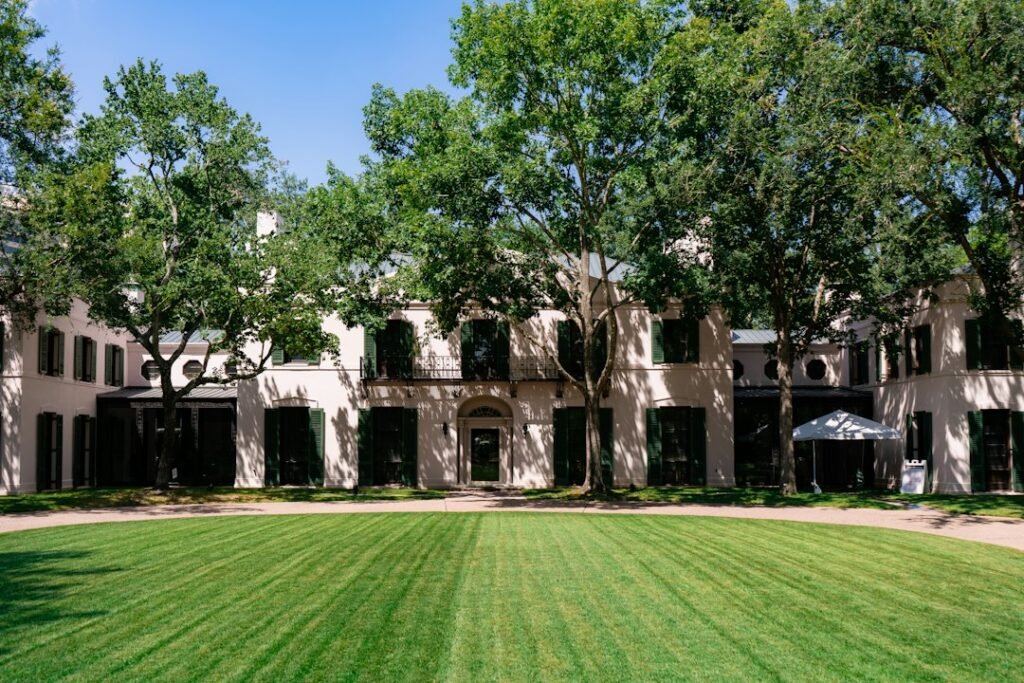
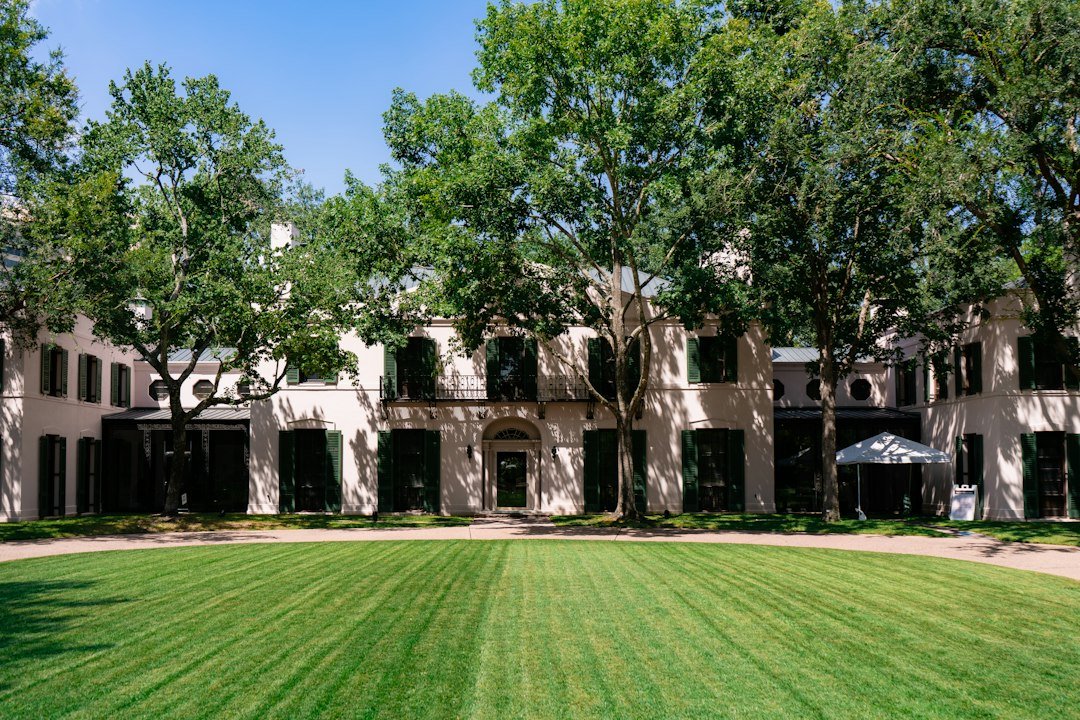
St. Augustine under trees can turn brown because of deep shade, competition from tree roots, uneven moisture, disease pressure, or mowing stress. The same area can be too shady for dense turf yet still dry quickly because tree roots use water aggressively.
Start with available light
St. Augustine is one of the more shade-tolerant warm-season grasses, but very dense canopy cover can still reduce growth below a sustainable level.
If turf gradually thins toward the tree trunk and improves near the brighter canopy edge, light is a major clue.
Check whether the soil is dry or wet
Do not assume shade means wet soil. Tree roots can remove substantial water, while irrigation may be blocked by trunks, roots, or canopy layout.
Probe several places beneath the tree and compare them with nearby open lawn.
Root competition matters
Large tree roots occupy the same upper soil profile as turf roots. St. Augustine may struggle where soil volume, water, and nutrients are limited.
Shade can increase leaf wetness
Reduced sun and air movement can keep leaves damp longer. That can raise disease pressure in some conditions.
If brown areas are bordered by yellowing tissue or develop during cool, moist periods, inspect for disease rather than blaming shade alone.
Raised roots can cause scalping
Surface roots make the ground uneven. A mower may cut turf too low over those ridges, creating repeated brown patches.
Check whether damage lines up with exposed roots or mower passes.
Do not bury tree roots to save the lawn
Adding large amounts of soil over tree roots can harm the tree and change drainage. Lawn repair should not create a new landscape problem.
When turf may not be the right ground cover
If the site receives too little light for dense St. Augustine despite proper water and mowing, a shade-tolerant ground cover or mulched bed may be more realistic.
Diagnostic order
- Map the shade pattern.
- Probe soil moisture.
- Inspect tree-root competition and surface roots.
- Check for mowing scalps.
- Look for disease symptoms.
- Decide whether the site can support turf long-term.
For yellow shade symptoms, read why St. Augustine turns yellow in shady areas. For general thinning, use the thinning-and-browning guide.
Additional diagnostic clues
Separate shade from root-zone competition
A lawn can fail under a tree even when light is adequate because the tree’s roots dominate the upper soil. Compare the same light level farther from the trunk. If turf improves with distance, root competition may be contributing.
Check irrigation interception
Tree trunks, exposed roots, landscape beds, and sprinkler placement can create dry pockets. Run the system and watch where the water actually lands beneath the canopy.
Do not overwater to compensate for tree roots
Extra irrigation can leave low or shaded zones saturated while still failing to solve competition near large roots. Use soil moisture at several points instead of increasing the whole-zone runtime.
When disease becomes more likely
If the area stays humid and wet, develops defined patches, or shows leaf lesions, investigate disease. Shade alone usually causes gradual thinning rather than a sharply expanding lesion pattern.
Long-term landscape choices matter
Where mature trees and dense turf are fundamentally competing for the same space, redesigning the area can be more successful than repeatedly treating symptoms.
Observe the canopy throughout the day
A site may receive a short burst of direct sun but remain deeply shaded for most of the day. Note when sunlight actually reaches the grass instead of judging shade from one visit.
Check whether exposed roots are redirecting water
Large surface roots can create miniature ridges that shed irrigation away from nearby turf. One side of a root may stay dry while the other remains moist.
Avoid repeated sod replacement without diagnosis
Fresh St. Augustine can look good briefly under a tree because it arrives with stored energy. If light and root competition remain limiting, replacement sod may thin again. Correct the site limitation before assuming the sod itself was poor.