St. Augustine grass can look excellent in Dallas, but it responds quickly to heat, drought, shade, mowing mistakes, irrigation problems, and pest pressure. A calendar helps because the right lawn-care decision in March is not always the right decision in July or October.
This month-by-month guide is designed for Dallas and North Texas homeowners. Use it as a practical framework rather than a rigid schedule. Weather, soil, shade, irrigation coverage, and the condition of your lawn should always influence what you do next.
Quick Dallas St. Augustine care principles
- Mow high enough. Texas A&M recommends maintaining St. Augustine at roughly 2.5 to 3.5 inches, with taller mowing especially helpful in moderate shade.
- Follow the one-third rule. Avoid removing more than one-third of the green leaf canopy in a single mowing.
- Water deeply and less often. Established St. Augustine generally performs better with deeper, less frequent irrigation than with daily light watering.
- Fertilize only when the lawn is actively growing. A soil test is the best starting point for determining nutrient needs.
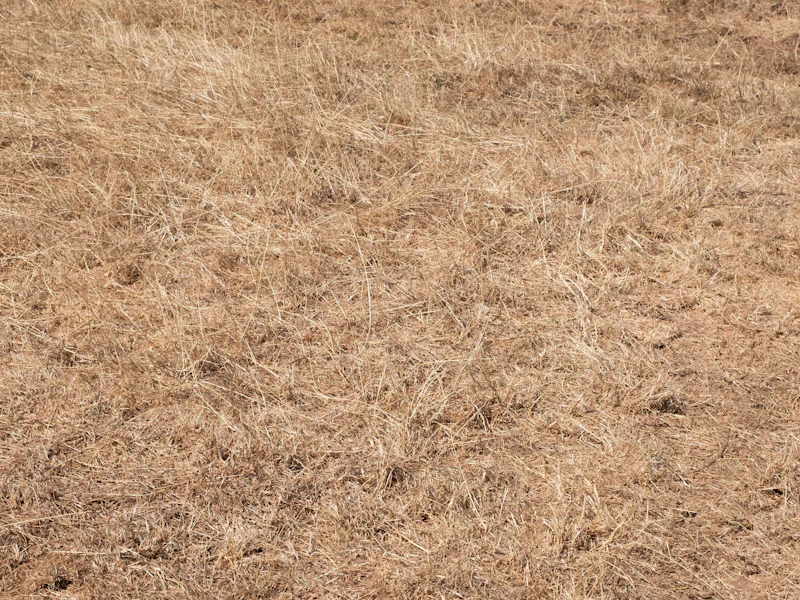
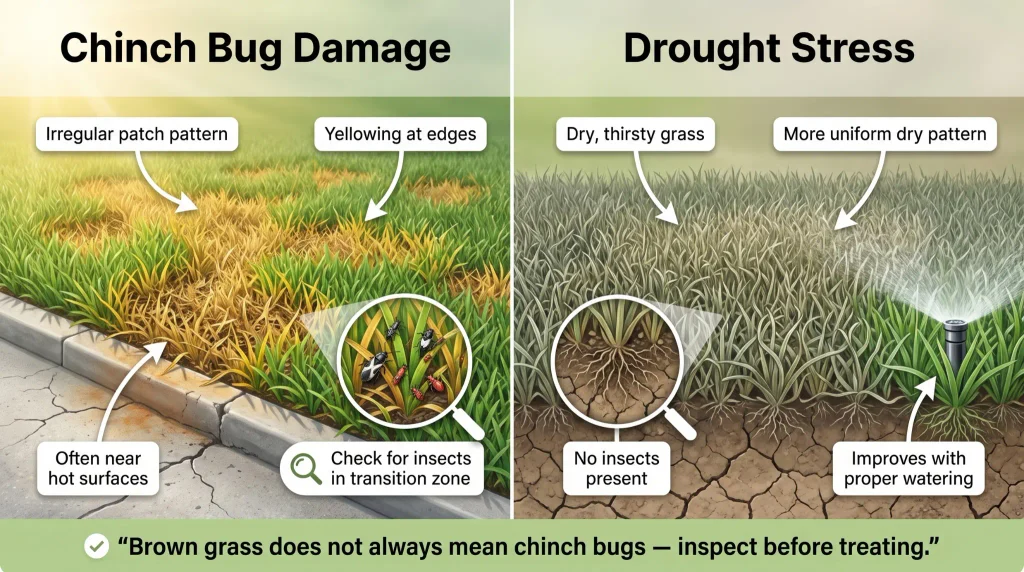
- Do not diagnose by color alone. Brown or yellow turf can result from irrigation stress, chinch bugs, disease, roots, shade, compaction, or several problems at once.
January: leave dormant turf alone
January is usually a low-input month for St. Augustine in Dallas. Growth is limited or dormant, so routine fertilization is unnecessary for most lawns.
Use this month to inspect the site rather than trying to force growth. Look for drainage problems, compacted pathways, heavy shade, sprinkler damage, and areas where water collects after rain.
January priorities:
- Avoid routine nitrogen fertilizer on dormant turf.
- Water only when prolonged dry weather and local conditions justify it.
- Keep leaves and heavy debris from smothering the grass.
- Inspect irrigation heads while the lawn is easy to see.
February: prepare, but do not rush spring
Warm days can make a Dallas lawn look as though spring has arrived, but St. Augustine may still be partly dormant. Avoid pushing it with fertilizer simply because a few green blades appear.
This is a good time to clean up the lawn, service the mower, sharpen the blade, and identify areas that struggled the previous year.
March: watch the green-up
March is a transition month. As temperatures rise, St. Augustine begins to green, but the lawn may still be uneven. Yellow or weak areas do not automatically mean the lawn needs more fertilizer.
Texas A&M recommends waiting until the grass is actively growing before the first fertilizer application. One practical signal is that the lawn has required mowing at least twice.
March priorities:
- Begin mowing once growth becomes active.
- Check sprinkler coverage before summer demand increases.
- Look for spring disease symptoms and root problems.
- Delay nitrogen until the turf is clearly growing.
April: build healthy growth without overfeeding
By April, many Dallas St. Augustine lawns are moving into active growth. This is when mowing height, irrigation, and nutrient management begin to matter more.
If fertilizer is needed, use a soil test and product label rather than guessing. Texas A&M notes that fertilizer should be applied while turf is actively growing and able to use the nutrients.
Do not assume a dark green lawn is automatically a healthier lawn. Excessive nitrogen can create fast, soft growth and can increase management problems.
May: heat and pest monitoring become important
By May, Dallas temperatures can rise quickly. Mowing should usually be consistent enough that you are not removing a large portion of the leaf blade at once.
Dallas County Master Gardeners recommends maintaining St. Augustine around 2.5 inches in full sun and around 3 to 3.5 inches in moderate shade. This taller canopy can help the grass maintain leaf area and tolerate stress.
Late spring is also the time to start paying closer attention to chinch bugs, irrigation gaps, and gray leaf spot symptoms.
June: shift from growth management to stress management
June is when North Texas lawns begin facing sustained heat. The most important question becomes less “How can I make the lawn grow faster?” and more “What is limiting the lawn right now?”
Before increasing watering, inspect soil moisture and sprinkler distribution. A dry strip along a driveway can be caused by irrigation coverage, reflected heat, root limitations, or insects.
Texas A&M generally recommends deep, infrequent irrigation for established turf rather than frequent shallow watering. Natural rainfall should always be considered before running the system.
June priorities:
- Maintain proper mowing height.
- Check irrigation uniformity.
- Watch sunny edges for chinch bug activity.
- Avoid unnecessary fertilizer during severe stress.
- Inspect shaded areas for thinning rather than automatically adding more water.
July: protect the lawn during peak heat
July is one of the most stressful months for St. Augustine in Dallas. Heat, dry weather, irrigation problems, and chinch bugs can all create similar-looking brown or yellow areas.
Do not treat a brown patch based on appearance alone. Check soil moisture, sprinkler coverage, and the edge of the damaged area before making a decision.
Early-morning irrigation is generally preferred because it reduces evaporation compared with watering during the heat of the day and allows foliage to dry as the day progresses.
If a lawn remains green in some areas while other sections decline, compare sunlight, soil moisture, irrigation pattern, traffic, and insect activity before assuming the whole lawn has the same problem.
August: continue monitoring instead of overcorrecting
August often brings the same heat-related pressure as July. This is where homeowners can unintentionally make problems worse by adding too much water, fertilizer, or pesticide at the same time.
If you suspect chinch bugs, inspect the transition zone between healthy and declining turf and confirm the insects before treating. If the soil is already wet, additional irrigation will not solve a root or disease problem.
Keep mowing consistent and avoid scalping stressed turf. A sharp mower blade is especially useful because ragged cuts add unnecessary stress.
September: help the lawn finish the growing season well
September can still be hot in Dallas, but the lawn is moving toward the end of its main growing season. Continue mowing while the grass is actively growing and keep watching water needs rather than relying on a fixed timer.
Texas A&M advises that the final nitrogen application should generally occur several weeks before the historic first frost date, helping avoid excessive late-season growth.
Do not try to repair every summer injury with heavy fertilizer. If an area is dead, first identify why it failed before installing new sod.
October: reduce inputs as growth slows
As temperatures fall, St. Augustine growth slows. Irrigation demand usually falls too. Automatic watering schedules that made sense in summer can easily become excessive in fall.
Excess moisture during cooler conditions can contribute to disease pressure. Water based on actual soil and turf conditions rather than simply leaving the controller on the same schedule.
Continue mowing as needed, but expect the interval between mowings to increase.
November: move into winter mode
By November, the lawn is typically moving toward dormancy. This is not the time to push new growth with late nitrogen.
Use the quieter period to review the year. Which areas repeatedly browned? Which sections stayed wet? Where did weeds or pests return? Those patterns are useful clues for next season.
December: protect, observe, and plan
December is mostly a maintenance and observation month. Keep heavy leaf cover off the lawn, avoid unnecessary traffic on stressed areas, and water only when prolonged dry conditions make it necessary.
If the lawn struggled during the year, winter is a good time to plan a soil test, irrigation inspection, shade assessment, or other diagnostic work before spring.
How often should you mow St. Augustine in Dallas?
Mowing frequency should follow growth, not a fixed calendar. During strong spring and summer growth, that may mean mowing every several days to about once a week. During cooler periods, mowing becomes less frequent.
The more important rule is to avoid removing more than one-third of the green canopy at once. If the lawn becomes too tall between cuts, lower it gradually rather than cutting it dramatically in one mowing.
How often should you water?
There is no single number that works for every Dallas property. Soil type, shade, irrigation efficiency, rainfall, slope, roots, and temperature all change how quickly a lawn dries.
Texas A&M recommends deep and infrequent watering for established turf. During hot weather, established lawns often do not need irrigation more than one or two times per week when rainfall is absent, but the lawn and soil should determine the schedule.
Signs of drought stress can include folded or wilted leaves and a dull blue-gray appearance. Those symptoms are more useful than watering automatically because the calendar says it is Tuesday.
When should you fertilize St. Augustine in Dallas?
Start with a soil test whenever possible. The purpose of fertilizer is to replace nutrients the lawn actually needs, not simply to make the grass darker.
Apply fertilizer when St. Augustine is actively growing. Avoid pushing dormant turf in winter, and avoid late nitrogen that encourages tender growth shortly before cold weather.
When should you check for chinch bugs?
Chinch bug activity is especially important during hot weather. Dallas County Master Gardeners advises homeowners to watch St. Augustine for chinch bugs from late spring through summer.
The strongest clue is finding the insects themselves, not simply seeing brown turf. Inspect the border between healthy grass and a declining patch, especially in sunny areas near pavement.
For a detailed identification process, see our guide: Chinch Bugs in St. Augustine Grass: How Dallas Homeowners Can Identify the Damage.
Common Dallas St. Augustine mistakes to avoid
- Mowing too low. Scalping reduces leaf area and adds stress.
- Watering every day. Frequent shallow irrigation can encourage shallow rooting and waste water.
- Fertilizing before active growth. Wait until the turf is actually growing.
- Treating every brown patch as insects. Irrigation, drought, roots, disease, shade, and pests can overlap.
- Leaving the summer irrigation schedule unchanged in fall. Water needs decline as temperatures and growth decrease.
- Replacing dead sod before correcting the cause. New turf may fail again if the underlying problem remains.
A simple seasonal checklist
Spring: confirm active growth, begin regular mowing, inspect irrigation, diagnose weak areas, fertilize only when appropriate.
Summer: maintain mowing height, water based on need, monitor chinch bugs and disease, reduce unnecessary stress.
Fall: reduce irrigation as demand falls, avoid excessive late nitrogen, continue mowing until growth slows.
Winter: avoid routine fertilization, keep debris off the lawn, inspect site problems, and plan improvements for spring.
Sources and further reading
- Texas A&M AggieTurf: St. Augustinegrass
- Texas A&M AgriLife Extension: St. Augustinegrass Lawn Management
- Texas A&M AgriLife Extension: St. Augustinegrass Home Lawn Maintenance Calendar
- Dallas County Master Gardeners: May Garden Tasks
This guide is informational. Lawn conditions vary by property, and pesticide or fertilizer products should always be used according to the current label. Local watering rules can also change, so check current requirements before irrigating.