Brown St. Augustine grass in Dallas is not a single problem. Heat, drought, chinch bugs, irrigation gaps, root disease, shade, compaction, and physical damage can all leave turf looking thin, yellow, or dead.
The most important repair step is therefore not adding sod or fertilizer. It is identifying and correcting the reason the grass failed in the first place. New turf planted into the same unresolved problem can decline again.
This guide explains how Dallas homeowners can evaluate damaged St. Augustine, decide what may still recover, and repair areas that are truly dead.
Start here: is the St. Augustine stressed or actually dead?
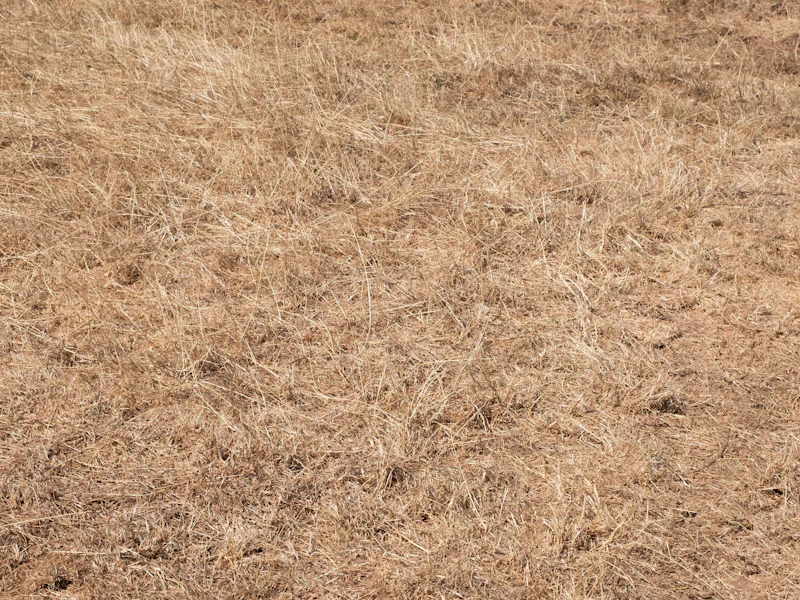
Brown grass is not always dead. During heat or drought, St. Augustine can lose color while some growing points remain alive. Turf that is yellow, wilted, or partly brown may recover after the underlying stress is corrected.
Completely dead areas are different. If stolons are brittle, roots are gone or badly rotted, and no green tissue remains after conditions improve, the area may need to be repaired rather than simply nursed back.
Before removing anything, compare the damaged area with nearby healthy turf and check:
- whether the soil is dry, saturated, or compacted;
- whether sprinkler coverage reaches the area evenly;
- whether chinch bugs or other pests are present;
- whether roots are healthy and attached to the soil;
- whether shade or tree-root competition is limiting growth;
- whether the damage is still expanding.
Step 1: identify what caused the brown area
A repair is only as good as the diagnosis behind it. Texas A&M AgriLife notes that St. Augustine decline can come from insects, disease, water stress, fertility problems, and root issues, and several of these causes can look similar from above.
Heat and drought stress
Drought-stressed St. Augustine may look dull, bluish-gray, wilted, or brown. The pattern often lines up with weak sprinkler coverage, sunny slopes, hot pavement edges, or shallow soil.
If you are unsure whether the problem is drought or insects, use our guide: Chinch Bugs vs Drought Stress in Dallas St. Augustine.
Chinch bug damage
Chinch bugs are a common summer pest of St. Augustine and can cause irregular expanding areas of yellow or dead turf. The strongest evidence is finding the insects themselves in the actively declining edge of the lawn.
See our Dallas chinch bug guide and chinch bug identification guide before treating.
Root disease
Take-all root rot can leave St. Augustine weak, yellow, thin, and easier to pull from the soil because damaged roots are short, dark, and rotten. Large patch can also create brown or yellow areas, although the seasonal pattern and appearance can differ from summer drought or chinch bug damage.
Shade and site stress
St. Augustine tolerates some shade, but heavily shaded areas can remain thin and weak. If an area repeatedly fails under a dense tree canopy, replacing the grass without changing the light conditions may only repeat the problem.
Step 2: correct the cause before repairing the turf
Do not install new sod into a problem that is still active.
Before repair, make sure:
- active chinch bug pressure has been addressed if insects were confirmed;
- sprinkler coverage is adequate and not overwatering the area;
- drainage problems are corrected;
- the soil is not remaining saturated;
- the site gets enough light for St. Augustine;
- root disease is not still actively damaging the turf;
- traffic or compaction is not continuing to injure the area.
Texas A&M emphasizes cultural practices such as proper irrigation, balanced fertility, drainage, and thatch management because these conditions affect whether St. Augustine recovers successfully.
Step 3: decide whether natural recovery is realistic
St. Augustine spreads horizontally through stolons. If healthy living turf surrounds a small damaged area, the lawn may be able to grow back into the space once the original stress is removed.
Natural recovery is more realistic when:
- the damaged area is small;
- healthy green runners remain around the edges;
- the growing season is still active;
- sunlight and irrigation are adequate;
- the underlying cause has been corrected.
Larger completely dead areas usually recover much more slowly and may be better candidates for sod repair.
Step 4: remove dead material without damaging healthy runners
If the area is truly dead, remove loose dead turf, excessive thatch, and debris so new sod or healthy runners can contact the soil.
Do not aggressively scalp or rake healthy St. Augustine around the repair area. Existing live stolons are valuable because they can help fill the edges of the repair.
If the soil is compacted, loosen only the upper surface enough to improve contact. Deep cultivation around tree roots or underground utilities can create additional problems, so keep the work appropriate for the site.
Step 5: evaluate the soil level and drainage
Before installing new turf, make sure the repaired area is not significantly lower or higher than the surrounding lawn.
Low spots can hold water, while raised areas may dry too quickly. The final grade should allow water to move through the site without leaving the new sod constantly saturated.
If the area has repeatedly failed because water stands there after irrigation or rain, solve the drainage issue before adding grass.
Step 6: choose between natural fill-in and sod
Letting St. Augustine spread naturally
For small bare spots surrounded by healthy St. Augustine, patience may be enough. Healthy stolons can gradually grow across exposed soil during warm, active growth.
Keep the area evenly moist enough to support new growth, but do not keep the soil permanently wet.
Repairing with sod
Sod gives faster coverage and is usually the practical choice for larger dead sections. Match the grass type and, when possible, the cultivar already growing in the lawn so color and texture are consistent.
Install sod firmly against the soil with tight seams and avoid leaving air gaps under the pieces.
Step 7: water new sod differently from an established lawn
Fresh sod has very limited roots at first, so it needs more frequent moisture than established St. Augustine while it begins rooting into the soil.
The goal during establishment is to keep the sod and upper soil from drying out without leaving the area waterlogged. As roots develop, gradually reduce irrigation frequency and move toward deeper, less frequent watering.
Once the turf is established, Texas A&M recommends deep, infrequent irrigation rather than frequent shallow watering.
Step 8: avoid heavy fertilizer immediately after damage
More fertilizer is not automatically the answer to a brown lawn. If roots are damaged, the turf may not be able to use nutrients effectively, and excessive nitrogen can create weak growth or contribute to other lawn problems.
For established St. Augustine, Texas A&M recommends applying fertilizer while the grass is actively growing and using soil-test information when possible.
For seasonal timing, see the St. Augustine Grass Care Calendar for Dallas.
Step 9: mow carefully while the repair establishes
Do not mow newly placed sod until it has rooted enough that mowing will not pull or shift it.
After establishment, maintain St. Augustine at an appropriate height and avoid removing more than about one-third of the green leaf tissue at one mowing. Keeping a sharp blade also reduces unnecessary stress.
How long does St. Augustine take to recover?
There is no single recovery time because the answer depends on what caused the damage, how much living turf remains, the time of year, irrigation, sunlight, soil conditions, and whether sod is used.
A small stressed patch with living runners can begin improving once the problem is corrected. A large dead area will not simply turn green again and may require new sod or a longer period of lateral spread from healthy turf.
When should you repair St. Augustine in Dallas?
Repair is most successful while St. Augustine is actively growing and temperatures are warm enough for rooting and lateral growth.
Avoid expecting strong establishment during winter dormancy. If major damage occurs late in the season, it may be better to stabilize the area and make the full repair when active growth returns.
When sod keeps dying in the same spot
Repeated failure is usually a sign that the site problem has not been solved.
Check for:
- deep shade;
- tree-root competition;
- poor drainage;
- compacted soil;
- sprinkler gaps;
- chronic overwatering;
- root disease;
- repeated chinch bug activity;
- heavy foot traffic or pet traffic.
If the same area has been resodded more than once and continues to fail, focus on the site conditions before buying more grass.
Can you repair brown St. Augustine without replacing sod?
Sometimes. If stolons and roots are still alive, the turf may recover after the stress is corrected. Small bare spots can also fill from healthy surrounding runners during active growth.
Completely dead turf does not regenerate from dead plant tissue. Recovery must come from living adjacent St. Augustine or from newly installed material.
What not to do when repairing a damaged lawn
- Do not fertilize first and diagnose later. Nutrients do not fix pests, irrigation gaps, root disease, or shade.
- Do not keep adding water to already-wet soil. Saturated roots can decline further.
- Do not install new sod while an active pest problem remains.
- Do not treat every brown patch with insecticide. Confirm insects before treating.
- Do not scalp healthy St. Augustine around the repair. Living runners help recovery.
- Do not repair a shaded failure with the same approach repeatedly. Light may be the limiting factor.
A simple repair checklist
- Confirm whether the turf is stressed or dead.
- Identify the likely cause.
- Correct irrigation, pest, disease, shade, drainage, or compaction problems.
- Decide whether healthy runners can fill the area naturally.
- Remove loose dead material from areas that truly need repair.
- Prepare a level soil surface with good drainage.
- Install matching St. Augustine sod if the area is too large for practical natural recovery.
- Keep new sod appropriately moist while it roots.
- Reduce irrigation frequency as establishment improves.
- Return to normal mowing and fertility only after the turf is actively growing.
Frequently asked questions
Will dead St. Augustine grass come back?
Dead plant tissue will not come back. Recovery requires living stolons or roots, surrounding healthy turf spreading into the area, or new sod.
Should I rake out all brown St. Augustine?
Not automatically. Some brown-looking turf may still contain living runners or growing points. Confirm that the material is dead before aggressively removing it.
Should I fertilize a brown lawn to make it green again?
Only after determining that fertilizer is actually needed and the grass is actively growing. Fertilizer will not correct drought, chinch bugs, disease, poor drainage, or shade.
Can I put new sod directly over dead grass?
It is better to remove loose dead material and provide good soil contact. Sod placed over a thick dead layer can root poorly.
Why did my replacement St. Augustine die again?
The most common reason is that the original site problem remained. Recheck irrigation, drainage, pests, roots, shade, compaction, and traffic before repeating the repair.
Sources and further reading
- Texas A&M AgriLife Extension: St. Augustinegrass Lawn Management
- Texas A&M AgriLife Extension: Chinch Bugs in St. Augustine Lawns
- Texas A&M AgriLife Extension: Earth-Wise Guide to Lawn Problems
This article is informational and does not replace an in-person lawn diagnosis, soil test, or pesticide label. If a pesticide or fertilizer is used, follow the current product label and local requirements.