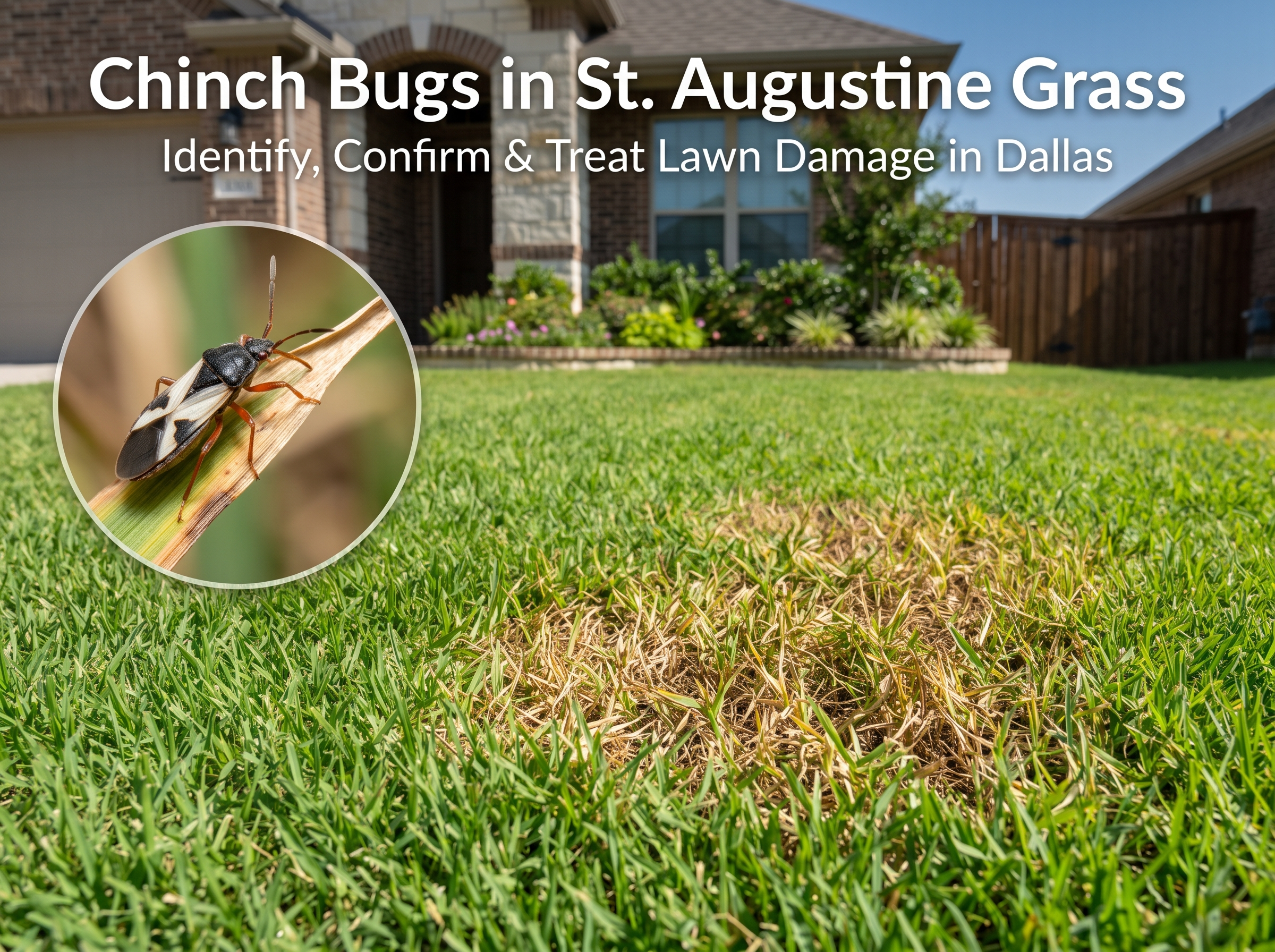
Chinch bug infestations can occur on St. Augustine in hot weather producing areas of yellow or brown that are expanding; however, drought, irrigation issues, or disease can produce similar symptoms. It’s not all about the color of the grass. The presence of chinch bugs in the damaged, but alive turf, particularly in the areas where healthy turf meets stressed turf, is where it is looking.
That’s something that’s important in Dallas. Several lawn issues can occur in summer and treating for insects before they are identified can be time consuming, costly and harmful to beneficial insects. Here’s an outline of what to see, how to evaluate the lawn, other diseases and pests can mimic chinch bug and what to do if you get more evidence.
Typical signs of damage from chinch bugs in St. Augustine grass.
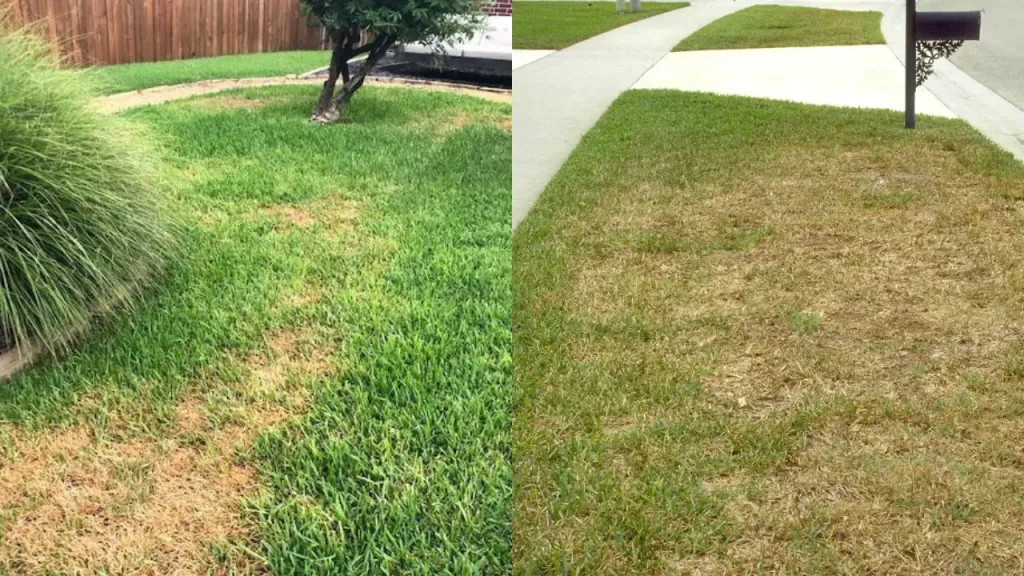
Texas A&M AgriLife offers a description of typical chinch bug injury: irregular patches of dead or stunted St. Augustine with yellowed and dead grass around it. As the numbers of insects grow the patches grow and fuse together. Typically, damage occurs more rapidly in sunny sites when weather is hot and dry.
That could mean that the damage isn’t visible until the warmest, most vulnerable areas of the lawn—such as sidewalks, driveways, curbs, patios or reflected-heat surfaces—appear. The Dallas County Master Gardeners also remind readers that chinch bugs tend to infest areas of the lawn during sunny days from mid-summer through early fall and can be a problem again in subsequent years in the same areas.
Useful clues include:
- Irregular (not round) spots.
- Green turf that turns yellow and/or declines at the edges of turf that is already dead.
- Expanding damage rather than static damage.
- Issues focused on warm and sunny locations.
- The irrigation coverage of the basic slopes (including their mapped extension to the irrigation District) has been checked, yet the problem continues to deteriorate in St. Augustine.
None of those signs can be used to show that chinch bugs are present. That, Texas A&M emphasizes, is the best indicator of finding significant numbers of the insects.
Where to inspect first
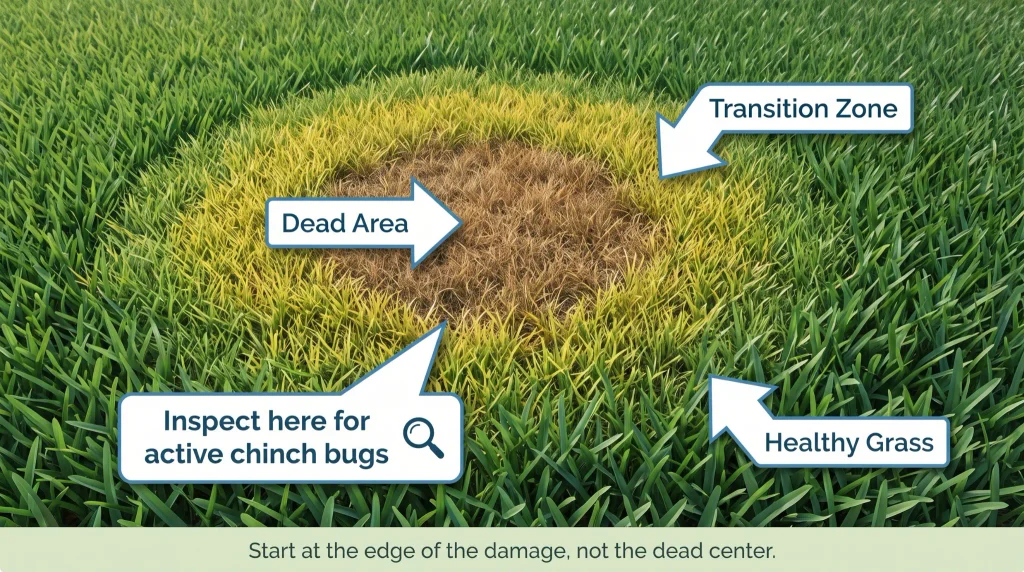
Avoid to begin from a totally killed section of the field. If damage is the result of chinch bugs, potentially a lot of bugs might have progressed to chinch life.
Rather, check the border area where healthy green St. Augustine turns yellow, wilted or recently injured. Spread your fingers to observe the lower stems, thatch and soil surface.
Focus particularly on:
- Conditions in wire wire and concrete areas when the soil is sunny.
- Bordering zone of an expanding brown patch.
- Zones that suffered damage last year from chinch bugs.
- During long periods of hot weather, stressed St. Augustine.
Look in several spots around the broken edge if you don’t see anything there. One look isn’t enough to let out the right meaning.
How to confirm chinch bugs with a flotation test
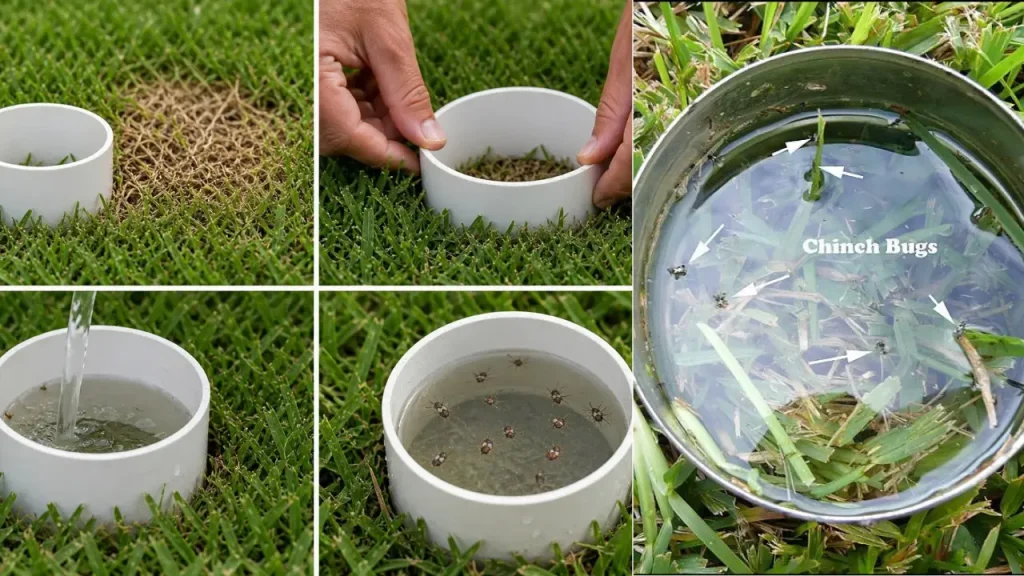
The flotation test can help identify the tiny chinch bugs. Use of an open-ended metal can containing water to allow insects to come up in the grass defines the benefit of water.The benefit of water is defined by Texas A&M as an open-ended metal can pushed into the turf and refilled with water to allow insects to rise to the surface.
Then select at the boundary to the problem area, some St. Augustine that is damaged but not dead.
- If necessary, take the lid and bottom of a metal can off it.
- Push the can into the turf and soil with a twisting motion.
- Add water to the can and let water sit in the can for about 10 minutes.
- Look on the surface carefully for small insects that are bouncing up.
- Perform the test more than once, instead of using only one sample.
According to Texas A&M’s extension guidelines, damage typically occurs when the chinch bug population reaches approximately 20-25 bugs per square foot. Average 4 to 5 or more chinch bugs per sample in a 6″ diameter flotation can can be considered damaging. Use those figures as “diagnostic extension benchmarks” and not as a replacement for reading the current product label or obtaining a diagnosis face-to-face when it is not clear.
What chinch bugs look like
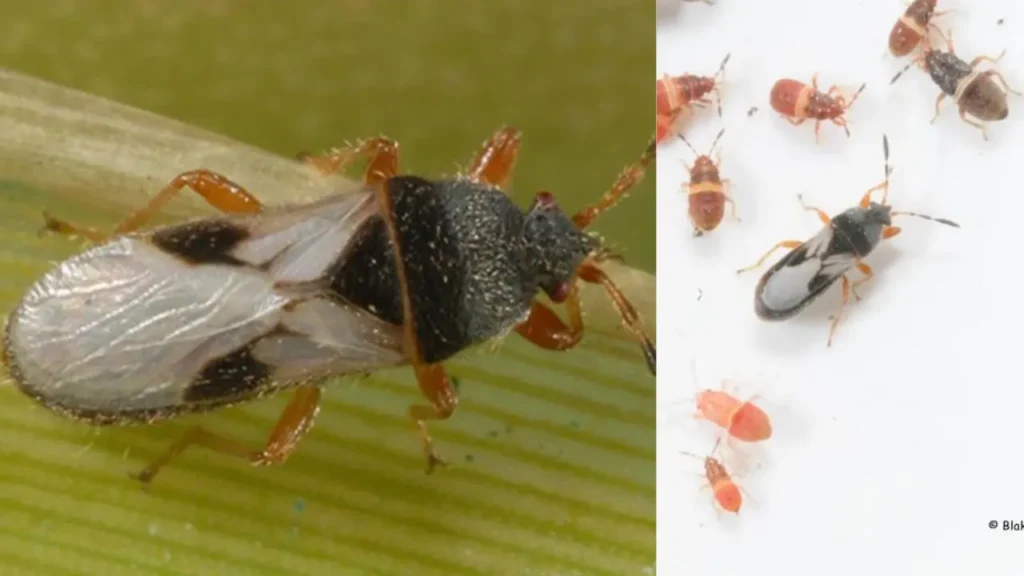
Adults are small (about 1/5″ to 1/6″) southern chinch bugs. Dark colored adults with lighter or whitish wings with darker markings. When they are hatched, nymphs are wingless, and may be yellow, orange, or pinkish-red, with a light stripe crossing the abdomen. They become darker and have wing pads as they grow older.
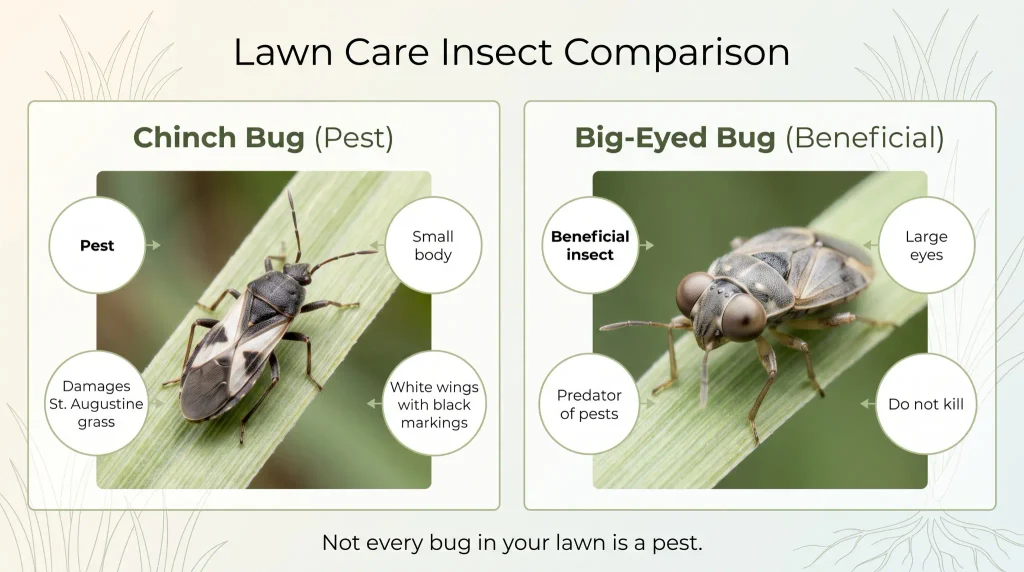
This is because identification is important because beneficial big-eyed bugs may be confused with the Chinch Bugs. Big-eyed bugs don’t damage lawns; they prey upon other insects. They also noticeably feature large eyes and a wider head; whereas a chinch bug is more slender and has the characteristic light and dark inlaid wing pattern in the adult.
Chinch bugs vs. drought: what actually separates them?
Clean separation between stress due to drought and stress due to chinch bug is not easily discerned; drought stress and chinch bug may occur simultaneously.
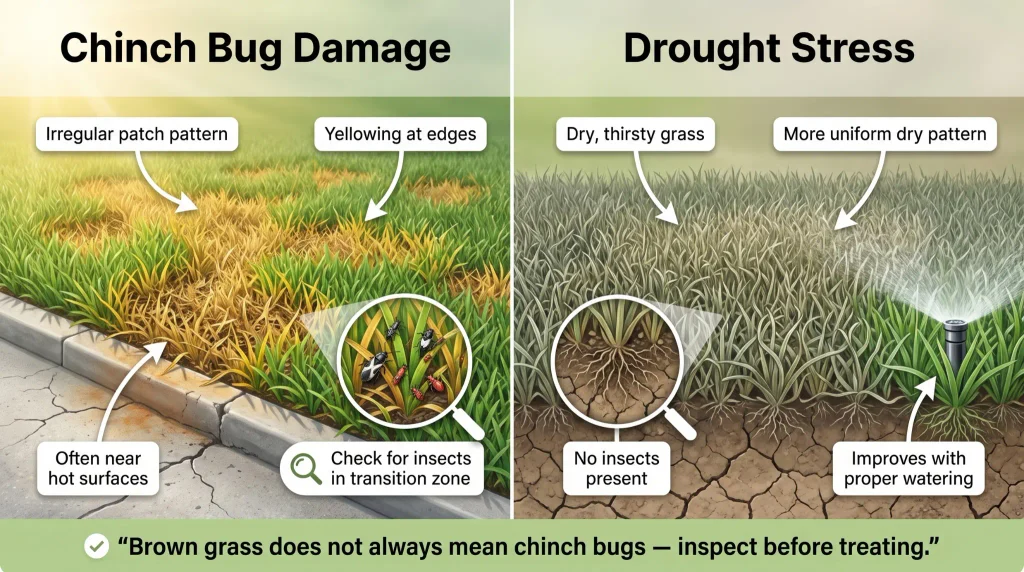
| Clue | More consistent with chinch bugs | More consistent with water stress |
|---|---|---|
| Pattern | Irregular expanding patches with a declining edge | May track sprinkler gaps, dry soil, slopes, or broad exposed areas |
| Location | Often hot, sunny St. Augustine near pavement | Anywhere irrigation is insufficient or roots cannot access moisture |
| Insects present | Chinch bugs found in the transition zone | No significant chinch bug population found |
| Best next check | Part the turf or use a flotation test | Check soil moisture and sprinkler distribution |
The main message is that you should never diagnose Chinch Bugs just from a brown patch. Note the irrigation pattern and the insects.
The lawn care hub in Dallas provides an additional starting point for diagnosis and the lawn problem guides are available as well.
What else can look like chinch bug damage?
Large patch and other turf diseases
Texas A&M notes that disease can be confused with chinch bug injury. Large patch commonly produces more circular or semi-circular patterns than the irregular expanding areas associated with chinch bugs. Season also matters: some fungal problems are more common outside the hottest part of summer.
Take-all root rot
Take-all root rot affects roots and can leave St. Augustine weak, yellow, and easier to pull from the soil. Dallas County Master Gardeners describes it primarily as a spring problem rather than a classic hot-summer chinch bug pattern.
Uneven sprinkler coverage
A dry strip along a driveway or a sunny edge can be caused by irrigation coverage just as easily as insects. Before treating, run the irrigation system and look for blocked heads, poor overlap, overspray, or sections that are not receiving comparable water.
White grubs or other root damage
Root-feeding pests can also produce irregular decline. Texas A&M recommends checking other causes—including irrigation, white grubs, and turf disease—when dead areas are not associated with high chinch bug numbers.
What to do if you confirm an active chinch bug problem
Once active chinch bugs are confirmed in damaging numbers, the goal is to stop further injury without automatically treating the entire property.
Texas A&M recommends confirming that treatment is actually needed, then following the label for any pesticide used. When an infestation is limited to one part of the lawn, spot treatment can reduce unnecessary pesticide use and lessen the impact on beneficial insects.
Practical next steps:
- Mark the active edge. Photograph or note the transition zone so you can see whether it continues to expand.
- Confirm insects in more than one location. This reduces the chance of treating the wrong problem.
- Use only a product labeled for the site and target pest. Read and follow the current label for application, protective equipment, watering, re-entry, and disposal instructions.
- Keep granules and spray out of storm drains, sidewalks, and streets. Sweep misplaced granules back onto the treated turf as directed by the label.
- Recheck the lawn after treatment. Texas A&M recommends inspecting treated areas every few days for about two weeks to determine whether the infestation is under control.
If you do not want to diagnose or treat the problem yourself, review the lawn care service options and use the provider-comparison questions on that page before hiring help.
What not to do
- Do not spray only because the grass is brown. Drought, disease, irrigation problems, roots, and other pests can look similar.
- Do not assume extra water will fix every brown patch. Water stress should be checked, but more irrigation can create other problems when the soil is already wet.
- Do not repeatedly apply broad insecticides as prevention. Texas A&M notes that unnecessary repeated insecticide use can reduce beneficial predators.
- Do not over-fertilize damaged turf. Excessive nitrogen can contribute to thatch and make St. Augustine more attractive to chinch bugs.
- Do not replace dead sod before addressing the cause. New turf can fail again if irrigation, pest pressure, roots, or site stress remain unchanged.
How lawn care affects future chinch bug risk
Good St. Augustine management does not guarantee that chinch bugs will never appear, but it can reduce conditions that favor serious damage.
Manage thatch
Thatch gives chinch bugs protected habitat and can interfere with control. Texas A&M recommends proper mowing, avoiding excessive fertility, and addressing unusually thick thatch when necessary.
Avoid both chronic drought and chronic overwatering
Hot, dry conditions favor chinch bug problems and drought-stressed turf is more vulnerable to injury. At the same time, constantly saturated soil can reduce root health and interfere with normal thatch decomposition. Irrigate based on actual turf and soil conditions rather than a fixed reaction to every brown area.
Monitor repeat trouble spots
If one sunny edge of the lawn has had chinch bugs before, make that area part of your summer inspection routine. Catching an active population while the damaged area is still small is easier than waiting until large sections of St. Augustine are dead.
Will St. Augustine recover after chinch bug damage?
Recovery depends on how much living turf remains and whether the original cause is under control. Yellow or stressed grass at the edge may recover if the growing points are still alive. Completely dead areas may need time to fill from healthy stolons or may eventually need repair with sod.
Before repairing bare areas, confirm that:
- Active chinch bugs are no longer present in damaging numbers.
- Sprinkler coverage is adequate.
- The area is not suffering from a separate root or disease problem.
- Light, drainage, and traffic conditions are suitable for St. Augustine.
The Dallas lawn care guides will continue to expand with separate articles on chinch bug testing, drought comparisons, treatment decisions, and St. Augustine recovery.
Common questions about chinch bugs in Dallas lawns
What time of year are chinch bugs most noticeable in Dallas?
Damage is most strongly associated with hot weather. Texas A&M highlights July and August conditions, while Dallas County Master Gardeners describes local problems from mid-summer into early fall. Weather varies by year, so use lawn symptoms and insect scouting rather than the calendar alone.
Do chinch bugs only attack St. Augustine grass?
Southern chinch bugs are primarily a serious pest of St. Augustinegrass. They may feed on other turf species, but Texas A&M identifies St. Augustine as the grass that suffers the most important damage from this pest.
Can I confirm chinch bugs just by looking at the brown pattern?
No. The damage pattern can raise suspicion, but detecting the insects themselves is stronger evidence. Check the transition zone or use a flotation test.
Can chinch bugs come back to the same area?
Yes. Dallas County Master Gardeners notes that they may infest the same parts of a lawn in later years. Previously damaged sunny edges are reasonable places to monitor during hot weather.
Should I treat the whole lawn if I find chinch bugs in one spot?
Not automatically. Texas A&M recommends spot treatment when infestations are restricted to isolated areas. The exact treatment should follow the current pesticide label and the actual extent of the infestation.
Sources and further reading
- Texas A&M AgriLife Extension: Chinch Bugs in St. Augustine Lawns
- Texas A&M Landscape IPM: Chinch Bugs
- Dallas County Master Gardeners: Chinch Bugs in St. Augustine Lawns
- NC State Extension: Chinch Bugs in Turf
This article is informational and does not replace a pesticide label or an in-person lawn diagnosis. If a pesticide is used, the product label is the controlling instruction for where, when, and how it may be applied.