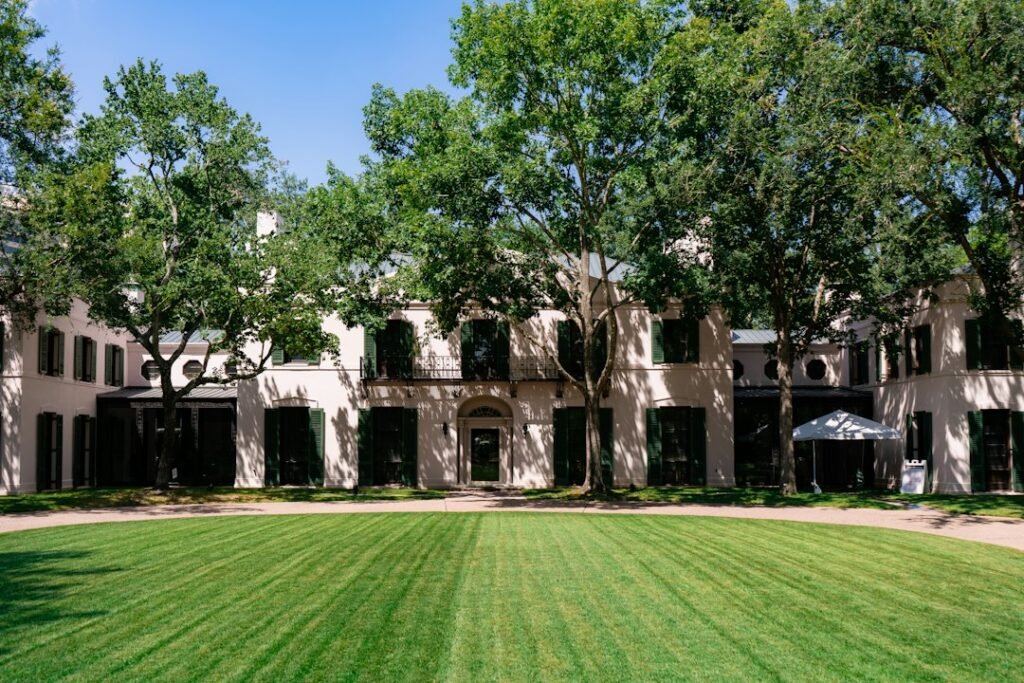
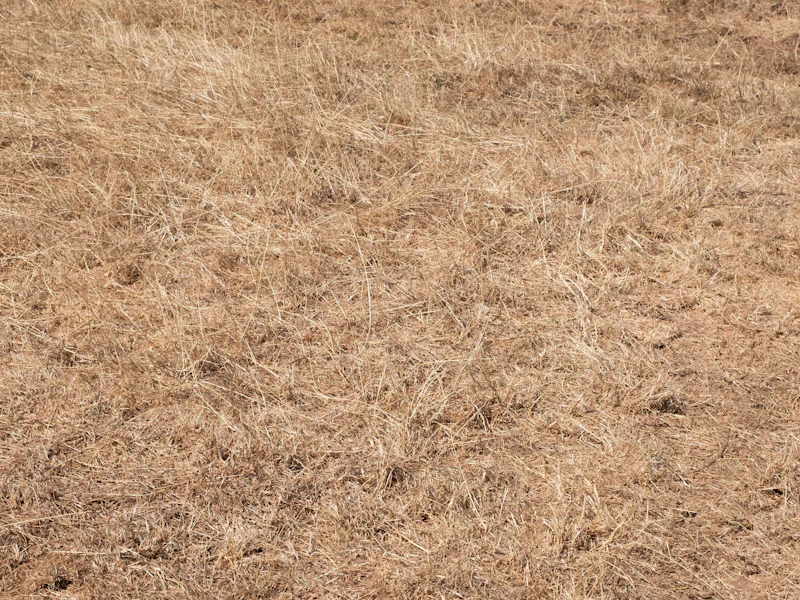
Brown St. Augustine grass may be dead, dormant, or temporarily stressed. The difference is easiest to judge by checking the season, stolons, crowns, roots, and whether new growth appears from living nodes when conditions improve.
What dormancy looks like
St. Augustine is a warm-season grass. In North Texas, cold weather can cause the lawn to lose green color and stop active growth.
Winter dormancy usually affects large areas relatively uniformly rather than creating one rapidly expanding summer patch.
Drought can also push warm-season turf into a temporary low-growth state. Texas A&M notes that warm-season grasses can survive periods of summer dormancy, although appearance declines.
What temporary stress looks like
Stressed St. Augustine can look dull, yellow, blue-gray, wilted, or brown without being dead.
Common stresses include:
- Heat.
- Drought.
- Too much water.
- Scalping.
- Shade.
- Temporary nutrient chlorosis.
- Mild chemical injury.
If the stolons are still firm and living, the lawn may recover once the stress is corrected.
What dead St. Augustine looks like
Dead turf has lost its living growing points. Stolons are dry and brittle, nodes show no viable tissue, and roots may be dead or absent.
A completely dead patch will not turn green simply because you add water or fertilizer.
Check the stolons
St. Augustine spreads through above-ground runners called stolons. They are one of the most useful recovery clues.
Gently bend or scrape a stolon. Living tissue is more flexible and may show green or pale living material. Dead runners are brittle and dry throughout.
Check the roots
Healthy roots should anchor the turf. If the sod lifts easily or the roots are short, dark, and rotten, root damage may explain why the patch is not recovering.
Root condition can separate simple drought stress from a deeper disease or pest issue.
Use the season
A uniformly brown St. Augustine lawn after cold weather may simply be dormant. A rapidly expanding brown patch in hot weather needs a different diagnosis.
Season narrows the possibilities but does not prove them.
Look for new growth at the nodes
When conditions become favorable, living St. Augustine can produce new leaves from nodes and spread with new stolons.
Small green shoots inside a damaged area are a strong sign that some tissue remains alive.
Do not force green-up
Heavy fertilizer does not bring dead turf back and can stress a lawn that is dormant, diseased, or waterlogged.
Correct the underlying condition and use normal seasonal fertility instead of trying to force color.
When should you wait?
Wait before replacing turf when:
- The grass is seasonally dormant.
- Stolons remain alive.
- New growth is appearing.
- The stress has only recently been corrected.
When replacement becomes reasonable
Repair is more appropriate when stolons and crowns are completely dead, the original problem has been corrected, and the surrounding turf cannot fill the area within a practical time.
Quick decision guide
| Clue | Dormant/stressed | Dead |
|---|---|---|
| Stolons | Firm or flexible, living tissue present | Dry and brittle |
| Roots | Still anchored | Dead, rotten, or absent |
| New shoots | Can appear when conditions improve | None from dead crowns |
| Response | May recover with time | Needs spreading turf or replacement |
For broader diagnosis, see why St. Augustine grass turns brown. For patchy decline, use the dying-in-patches checklist.
Additional diagnostic clues
Scratch tests are less useful on grass than on woody plants
Homeowners sometimes try a “scratch test” borrowed from shrubs or trees. With St. Augustine, the more useful evidence is whether stolons and nodes remain firm and whether they can produce new shoots. Check several runners, not one blade.
Give dormancy enough time to break
Early spring color can be uneven. Sunny areas may green first while shaded or north-facing sections remain brown longer. If stolons are alive and the lawn is emerging from winter, patience is often more useful than heavy fertilizer.
What would make death more likely
Death is more likely when runners are brittle throughout, roots are gone or rotten, no viable nodes remain, and the area does not produce new growth after surrounding St. Augustine has resumed active growth under suitable conditions.