
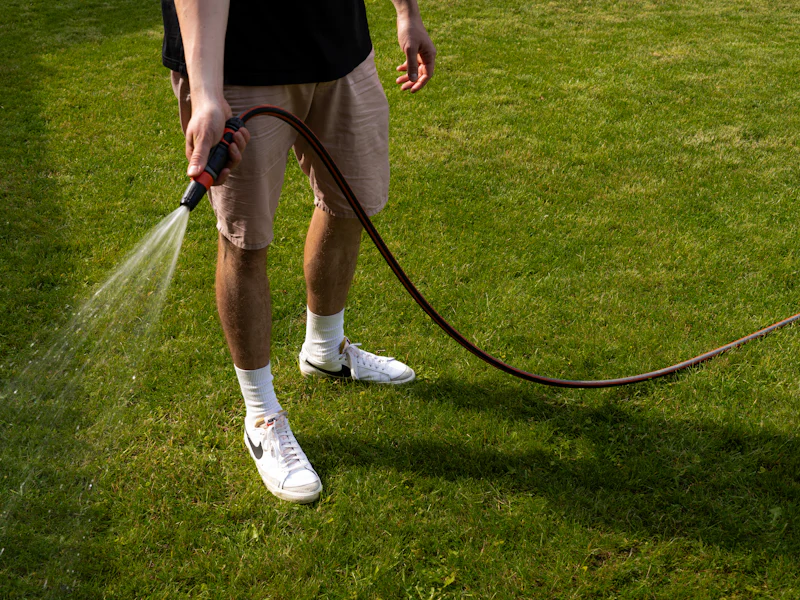
Overwatered St. Augustine often shows yellowing, weak or shallow roots, soft wet soil, slow recovery, and increased disease pressure. The key evidence is a root zone that stays wet longer than the turf needs—not simply a green lawn after irrigation.
Why too much water causes problems
Roots need both water and oxygen. When soil pores remain filled with water for long periods, oxygen availability drops and root function can decline.
Constant wetness also creates favorable conditions for some turf diseases.
Common signs of overwatering
- Soil stays soggy between irrigation cycles.
- Yellow or pale turf develops in wet areas.
- Roots are weak or shallow.
- Algae or moisture-loving weeds increase.
- The lawn feels soft underfoot.
- Disease problems recur in the same wet zones.
Do not confuse overwatering with drought
Both can cause weak, off-color turf. Check the soil. Dry root-zone soil supports drought; persistently wet soil points toward excess water or drainage problems.
Low spots are especially vulnerable
Water collects in depressions and may remain there long after the rest of the lawn drains. A yellow low spot can be a drainage issue rather than a fertilizer deficiency.
Automatic controllers can overwater
A fixed schedule does not account for rainfall, cooler weather, shade, or seasonal changes. Texas A&M recommends adjusting irrigation based on turf need and natural precipitation.
Shade changes water demand
Shaded St. Augustine generally loses water more slowly. Running the same irrigation schedule as a full-sun area can keep shaded soil wet too long.
Overwatering and large patch
Texas A&M notes that excessive watering during cooler transition periods can increase susceptibility to large patch disease.
If yellow-brown circular patches appear in wet spring or fall conditions, disease should be considered.
Check drainage before reducing irrigation blindly
Some areas stay wet because of compacted soil, poor grading, or subsurface drainage limitations. Simply shortening runtime may not solve standing water after rain.
How to correct the problem
- Stop unnecessary irrigation until the root zone begins to dry appropriately.
- Adjust the controller for season and rainfall.
- Check for low spots and drainage issues.
- Inspect roots if yellowing continues.
- Address disease only when symptoms support it.
For yellow turf broadly, see why St. Augustine turns yellow. For dry-soil comparison, use the drought stress guide.
Additional diagnostic clues
How often is “too often”?
There is no universal number of irrigation days that defines overwatering because soil, shade, weather, and sprinkler output differ. The better test is whether the root zone is still wet when the next irrigation begins.
If the soil rarely has a chance to drain and re-aerate, the schedule is too aggressive for that site.
Check for a sour smell or weak rooting
Chronically saturated soil can develop poor aeration. Roots may become shallow, sparse, or discolored. A lawn that pulls up easily despite wet soil needs a root inspection rather than another irrigation cycle.
Rainfall should change the schedule
Automatic controllers that continue running through rainy periods can turn a normal program into overwatering. Texas A&M recommends adjusting irrigation when natural precipitation meets part or all of the turf’s water demand.
Do not confuse lush growth with healthy roots
Overwatered turf may look green for a time while root quality declines. Long-term resilience matters more than short-term color.
What improvement should look like
As the root zone returns to a better moisture balance, the lawn should feel firmer, roots should remain anchored, and new growth should look healthier. Old yellow leaves may remain until they are replaced.
How a screwdriver test can help
A simple soil probe can show whether the root zone is still soft and saturated before the next scheduled irrigation. Compare several locations rather than one spot, because drainage can vary sharply across the same yard.
Watch for irrigation plus rainfall stacking
A lawn may not be overwatered by the irrigation system alone. Automatic watering immediately after repeated rain can keep the root zone wet far longer than intended. Rain sensors and seasonal controller adjustments can reduce that overlap when configured correctly.
Do not diagnose overwatering from mushrooms alone
Mushrooms can appear after wet weather because fungi are decomposing organic matter. Their presence can signal moisture, but it does not by itself prove the turf roots are overwatered or diseased.