St. Augustine can recover after a heat wave if the stolons, crowns, and roots are still alive and the conditions that caused the stress are corrected. The first goal is not to force the lawn green. It is to stabilize moisture, stop any continuing injury, and watch for new growth from living runners.
A heat wave can expose weak irrigation coverage, shallow roots, compaction, mowing stress, chinch bugs, or a combination of problems. Recovery depends on which of those issues is still active.
First confirm that the damage has stopped expanding
Mark the edge of the brown or yellow area with a small flag or use a fixed reference point in a photo. Recheck it over several days.
If the patch continues moving into healthy turf, the underlying problem may still be active. Before focusing on recovery, recheck soil moisture, irrigation coverage, roots, and chinch bugs.
Check whether the St. Augustine is still alive
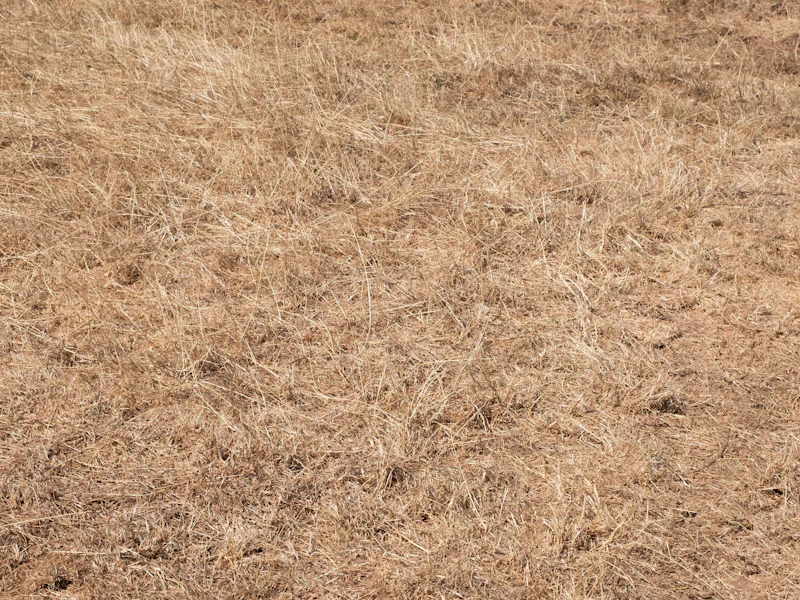
Pull back the brown leaf canopy and inspect stolons and nodes. Living runners are usually firm or flexible and may show green tissue or new shoots. Completely dead stolons are dry and brittle.
Old brown leaves can remain attached to living plants, so lawn color alone does not tell you whether recovery is possible.
Restore normal moisture—not constant moisture
Heat-stressed turf needs an adequately moist root zone, but daily saturation is not a recovery plan. Probe the soil and correct uneven sprinkler coverage rather than simply increasing every irrigation zone.
If one hot edge or slope failed while the rest of the lawn stayed healthy, treat that as a local irrigation or site problem.
Do not push recovery with heavy nitrogen
Extra nitrogen increases shoot growth and water demand. A heat-stressed lawn is better served by correcting the limiting factor and returning to normal seasonal fertility once the turf is actively growing and the root zone is functioning normally.
Keep mowing conservative while the turf rebounds
Avoid scalping weak St. Augustine. Maintain an appropriate mowing height and remove only a reasonable amount of leaf tissue at each mowing.
If the lawn was cut too short during the heat wave, give living stolons time to rebuild canopy before making additional height reductions.
Watch for new growth from the nodes
The best recovery signal is new green tissue, not old brown leaves changing color. During active growth, surviving St. Augustine can send out new leaves and runners from living nodes.
Small damaged areas can gradually fill from surrounding turf if the site conditions are suitable.
Recheck chinch bugs if hot spots keep declining
Hot, sunny St. Augustine near pavement is also a common chinch bug location. If moisture is adequate but an irregular area keeps expanding, inspect the transition zone for actual insects.
The Dallas chinch bug guide explains how to confirm them before treatment.
When repair is more realistic than waiting
If runners and crowns are completely dead, those plants will not green up again. Once the original cause is corrected, the area may need surrounding St. Augustine to spread into it or may be repaired with plugs or sod.
Do not install replacement turf until the irrigation, root, pest, or site problem that caused the failure has been addressed.
What recovery should look like over time
- The damage boundary stops moving.
- Stolons remain firm and anchored.
- New green shoots appear from living nodes.
- Healthy runners begin moving into thin areas.
- No new pest or disease symptoms develop.
Dallas summer recovery context
In North Texas, recovery is strongest while St. Augustine is still in active warm-season growth. Damage that occurs late in the growing season may stabilize before dormancy but fill more slowly until warm conditions return.
That is why recovery should be judged by living tissue and trend, not by a fixed number of days.
For symptom diagnosis before recovery begins, see St. Augustine heat stress. For broader brown-lawn troubleshooting, use why St. Augustine grass turns brown.