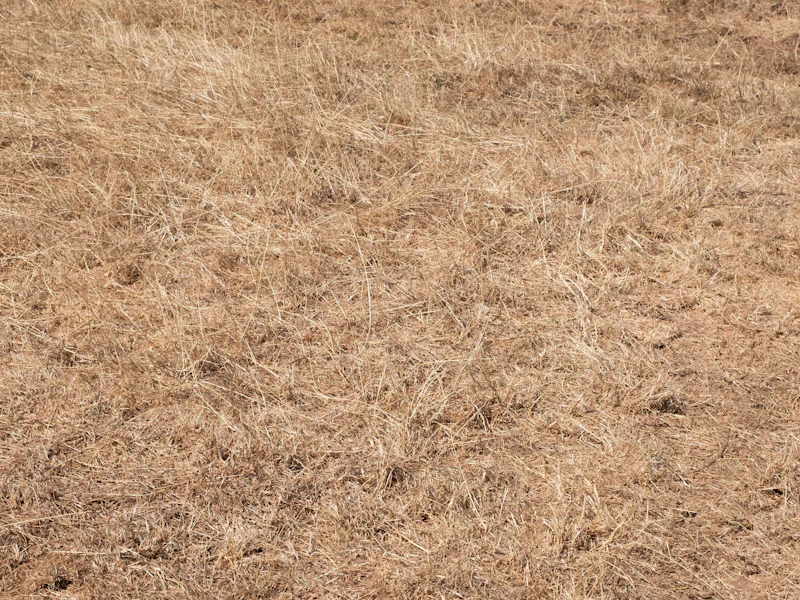
Heat stress in St. Augustine usually appears as wilting, dull or blue-gray color, slower growth, folded leaves, and eventually yellow or brown turf when water demand exceeds what the roots can supply. Heat alone often exposes another weakness such as dry soil, poor sprinkler coverage, root damage, scalping, or chinch bugs.
Heat stress is usually a stress multiplier
St. Augustine is adapted to warm conditions, but very hot weather raises water demand and increases surface temperatures, especially near pavement.
A lawn that looks fine during mild weather may suddenly reveal weak irrigation coverage or shallow roots during a heat wave.
Early symptoms
- Leaves fold or curl.
- Turf looks dull instead of glossy green.
- Color shifts toward blue-gray.
- Footprints remain visible.
- Growth slows.
These are similar to drought symptoms because heat and drought often occur together.
When heat stress becomes brown damage
If the roots cannot keep up with water loss, leaves can yellow and brown. Repeated stress can thin the canopy and expose stolons.
Brown tissue does not automatically mean the plant is dead. Check the runners and crowns.
Check irrigation first
During hot weather, small sprinkler problems become large lawn problems. Run each zone and look for blocked heads, weak overlap, and overspray onto concrete.
Probe the soil in both healthy and stressed areas.
Check mowing height
St. Augustine performs best at a relatively high mowing height. Scalping reduces leaf area and exposes lower plant tissue to more heat.
Texas A&M recommends roughly 2.5 to 3.5 inches for St. Augustinegrass.
Check roots
Heat-stressed turf with poor roots can decline even when irrigation is adequate. Root disease, compaction, and chronic saturation can all reduce effective rooting.
Check for chinch bugs
Hot sunny areas near pavement are also common chinch bug trouble spots. If the damage is irregular and expanding, inspect the active edge for insects.
Use the chinch bug guide if the pattern fits.
Why adding more water can backfire
More irrigation is not always the answer. Waterlogged roots can reduce oxygen and increase disease risk.
Water based on soil condition and turf need rather than setting the controller to run every day.
Heat stress vs. direct heat injury
Most summer browning is indirect: heat raises water demand and magnifies stress. Direct injury can occur where turf experiences extreme reflected heat, dry soil, or other local conditions.
The location of the damage matters.
Recovery after heat stress
If stolons remain alive, the lawn can recover during active growth once moisture and site conditions improve.
Avoid heavy fertilization as a “rescue.” Normal seasonal care is safer than forcing rapid growth in stressed turf.
What to check in order
- Soil moisture.
- Sprinkler coverage.
- Mowing height and scalping.
- Root condition.
- Chinch bugs.
- Shade or reflected heat.
For drought-specific symptoms, read signs of drought stress in St. Augustine. For the broad diagnosis, see why St. Augustine turns brown.
Additional diagnostic clues
Heat stress often reveals root-zone differences
Two parts of the same lawn can receive similar sunlight but respond differently because one has deeper soil, better roots, or less compaction. If one patch fails every hot spell, compare the root zone rather than treating the whole lawn the same.
Watch afternoon wilt versus permanent decline
Temporary afternoon wilt during extreme heat is not the same as progressive browning. Recheck the area the next morning. Turf that rebounds overnight may be stressed but functioning; turf that remains collapsed and discolored needs a closer moisture and root check.
Do not fertilize through severe heat stress
Forcing rapid growth raises water demand. If the lawn is already struggling to stay hydrated, focus on diagnosis and normal moisture management rather than pushing extra growth.
Dallas summer context
For Dallas homeowners, prolonged summer heat makes location-specific clues especially valuable. Pavement edges, west-facing slopes, thin soils, and poorly covered sprinkler zones can fail first even though the rest of the lawn remains green.