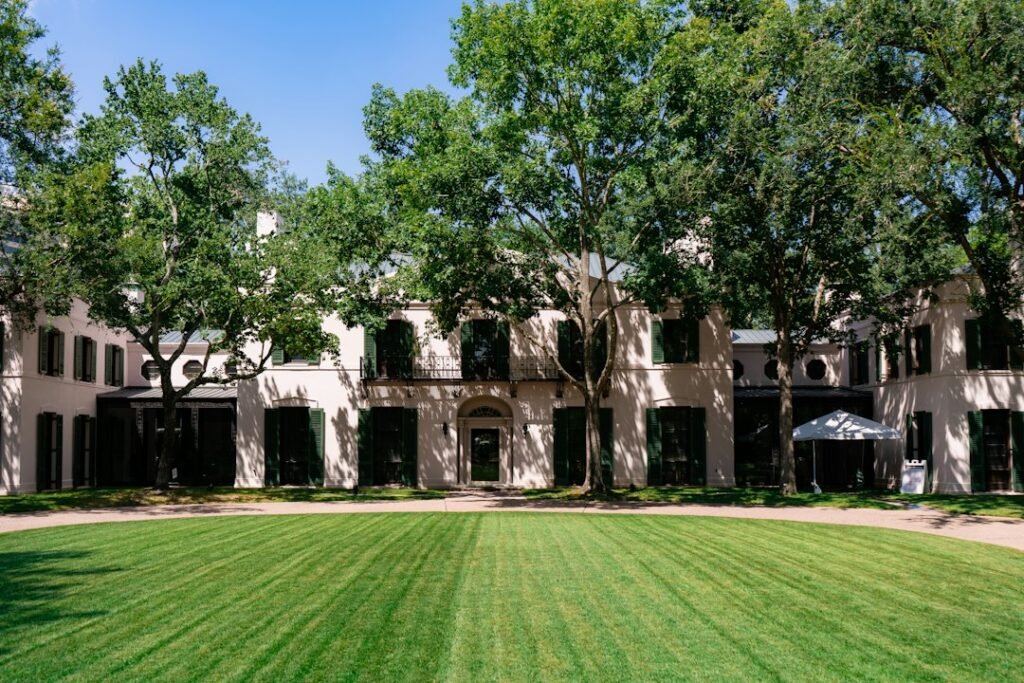
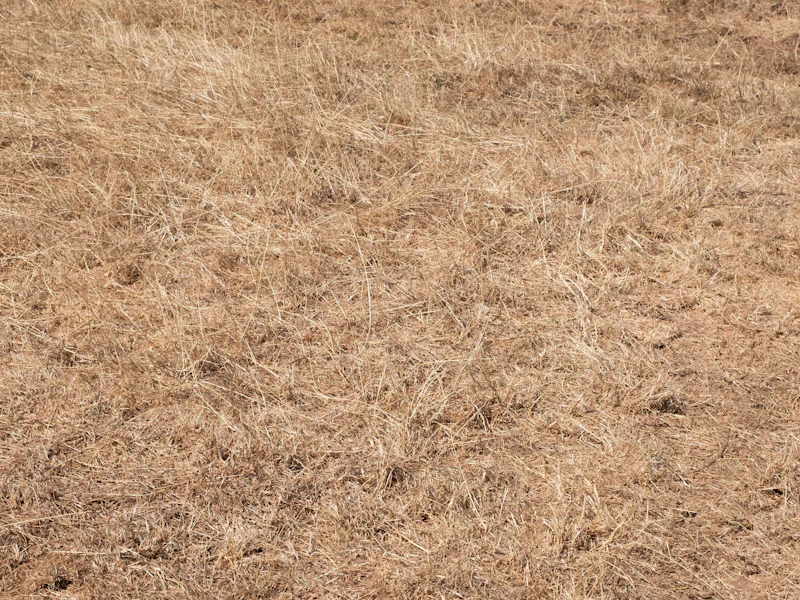
St. Augustine often browns beside sidewalks and driveways because concrete increases heat, the edge can dry faster, sprinkler coverage may be poor, and chinch bugs often show up in the same hot sunny locations. Chemical runoff or deicing/salt exposure can also injure turf in some situations.
Concrete raises the heat load
Hard surfaces absorb and radiate heat. Grass immediately beside pavement can experience higher leaf and soil temperatures than turf farther into the yard.
That extra heat increases water demand and exposes weak irrigation coverage quickly.
Check whether the edge is actually getting water
Sprinkler heads may overshoot narrow strips, be blocked by turf, or throw most of their water onto the pavement. Run the system and watch the edge rather than relying on controller runtime.
Probe the soil after irrigation. If the strip beside the concrete stays drier than the lawn interior, irrigation is a strong suspect.
Chinch bugs are another possibility
Texas A&M repeatedly associates southern chinch bug damage with hot, sunny St. Augustine. Pavement edges are practical scouting locations when the turf is yellowing or browning irregularly.
Inspect the transition zone for actual insects before treating. The Dallas chinch bug guide explains what to look for.
Look for a sharp chemical edge
Herbicide overspray, fertilizer spills, driveway cleaners, or other products can create a narrow brown strip along pavement. A sharp straight boundary or sudden damage after an application supports chemical injury more than drought.
Check mowing and edging practices
Repeatedly cutting the edge too low can weaken St. Augustine. String trimmers can scalp stolons along concrete and create a thin brown band.
Keep edging neat without removing the green growing points that allow the grass to spread.
Compacted edge soil
Soil near walkways can be compacted by foot traffic or construction. Compaction reduces water infiltration and root growth, which makes heat stress worse.
Why adding more water may not solve it
If the cause is chinch bugs, roots, chemical injury, or scalping, extra irrigation will not correct the problem. Confirm moisture first.
What to check in order
- Run the sprinkler zone.
- Probe moisture beside the concrete and farther into the lawn.
- Inspect the active edge for chinch bugs.
- Check for chemical spill or spray patterns.
- Review edging and mowing height.
- Check compaction and root condition.
For heat-related symptoms, see St. Augustine heat stress. For general browning, use the broad brown-grass diagnostic guide.
Additional diagnostic clues
Compare the width of the brown strip
A very narrow band directly against concrete often points toward edging, heat, or chemical exposure. A wider irregular zone extending several feet into the lawn makes irrigation, drought, or chinch bugs more plausible.
Inspect both sides of a sidewalk
If grass on both sides of the same walkway browns similarly, reflected heat or a shared irrigation problem deserves attention. If only one side declines, sun exposure, sprinkler direction, or soil conditions may differ.
Watch where wheels and feet travel
Driveway edges and sidewalk margins often receive mower-wheel, vehicle, or foot traffic. Repeated compression can create a compacted strip that absorbs water slowly and supports shallower roots.
Be careful with runoff from hard surfaces
Water carrying cleaners, salts, fertilizers, or other materials off pavement can injure a narrow turf edge. Recent maintenance or spills can be a stronger clue than the color pattern alone.
When insects are the stronger explanation
Chinch bugs move higher on the list when the patch is irregular, the transition zone is actively yellowing, and adults or nymphs are repeatedly found there. Heat beside pavement is only supporting context.
Why narrow edge strips can fail before the rest of the lawn
Narrow strips have more perimeter exposed to heat, foot traffic, edging, and nearby hardscape. They also tend to be awkward for sprinkler patterns. A strip can therefore decline while the main lawn remains healthy.
If the same strip fails repeatedly, treat it as a site-specific irrigation and soil problem rather than a whole-lawn issue.