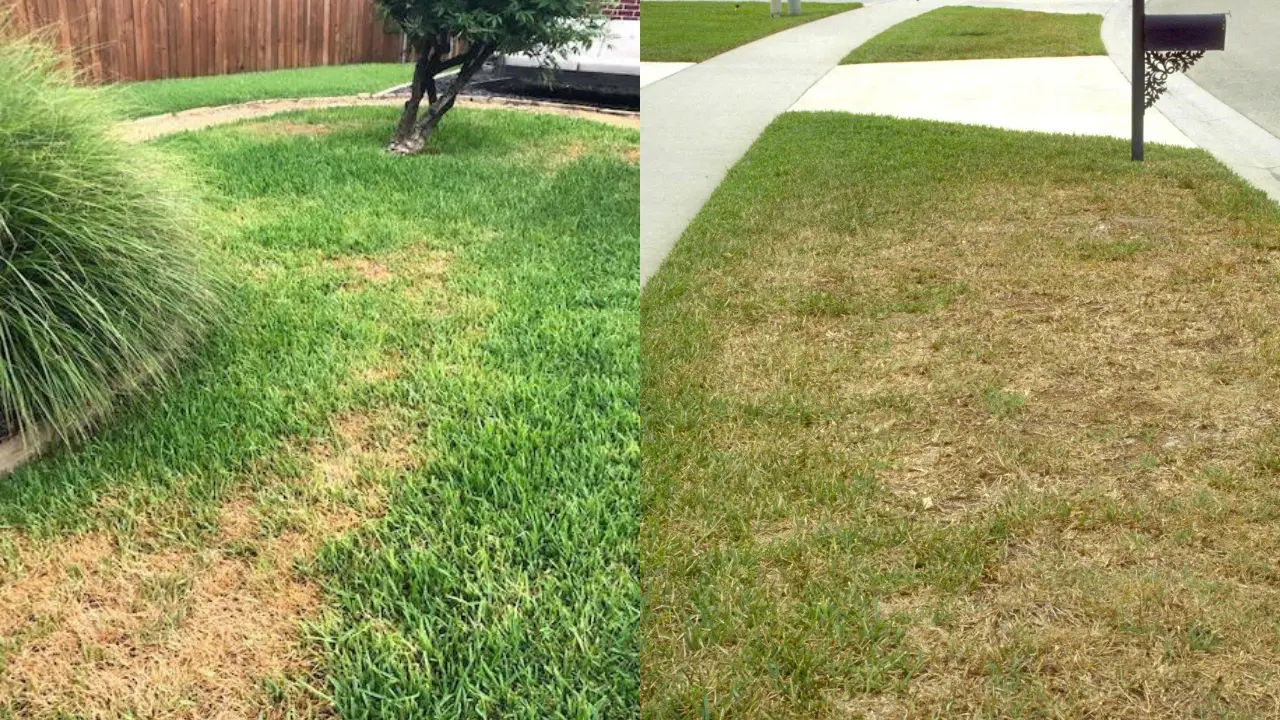
Repair chinch bug damage only after the active infestation is under control. If living St. Augustine remains around the damaged area, healthy stolons may gradually fill smaller gaps during active growth. Completely dead areas may need plugs or sod after the original pest and site problems are corrected.
Do not install new turf into an area where chinch bugs, drought stress, or irrigation problems are still active.
Step 1: Confirm that chinch bug feeding has stopped
Inspect the transition zone for living adults and nymphs. Texas A&M recommends monitoring treated sites every 3 to 5 days for at least two weeks to determine whether the infestation is under control.
If the damaged edge continues expanding, repair is premature.
Step 2: Decide what grass is still alive
Separate stressed turf from dead turf.
Living St. Augustine may have:
- Green tissue near the base.
- Firm, living stolons.
- New leaves emerging from nodes.
- Yellow or brown blades above living crowns.
Dead sections have no living growing points to recover from. Those areas need surrounding stolons to spread in or replacement turf.
Step 3: Check irrigation before repairing
Chinch bug damage often occurs in the same hot areas where water stress can develop. Run the irrigation system and correct:
- Blocked sprinkler heads.
- Poor overlap.
- Overspray onto pavement.
- Dry corners or edges.
New sod will struggle if the site still has the same water-distribution problem.
Step 4: Check for a second lawn problem
Do not assume chinch bugs caused every dead spot. Inspect roots and surrounding turf for signs of take-all root rot, large patch, grub injury, or other problems.
If the turf lifts easily because roots are damaged, solve that issue before spending money on replacement grass.
Step 5: Let small areas fill naturally when practical
St. Augustine spreads by stolons. During active growth, healthy runners can move into small bare areas if light, water, soil, and fertility are suitable.
Natural fill-in is slower than sod but avoids disturbing healthy surrounding turf.
Step 6: Use plugs for smaller repairs when appropriate
St. Augustine can be established with plugs. Plug spacing affects how long it takes the grass to cover bare soil, and wider spacing takes longer.
Use healthy, adapted turf material and keep new plugs appropriately moist while they establish.
Step 7: Use sod when faster coverage is needed
Texas A&M describes sodding as the quickest way to establish or repair turf. Sod can be used for small repairs or larger areas.
For successful repair:
- Remove loose dead material as needed.
- Prepare a smooth soil surface.
- Correct grade or drainage problems first.
- Lay sod tightly against neighboring pieces.
- Ensure good sod-to-soil contact.
- Keep new sod moist until roots establish, without keeping the site constantly saturated.
Should you dethatch before repair?
Only if excessive thatch is actually present and the lawn is healthy enough for the work. Aggressive dethatching can add stress to already damaged St. Augustine.
Focus first on the cause of the thatch—often mowing, irrigation, or excessive nitrogen.
Should you fertilize damaged St. Augustine heavily?
No. More fertilizer is not automatically faster repair. Excessive nitrogen can contribute to thatch and additional lawn stress.
Follow normal St. Augustine fertility guidance for the season and site.
When is repair most successful?
Warm-season turf repairs establish best when St. Augustine is actively growing and has enough time to root before cold weather. Texas A&M notes that sod can be used through much of the year, but rooting is fastest during active growth.
Late-season repairs may establish more slowly.
What if the same spot had chinch bugs before?
Keep it on a monitoring list. Sunny edges near pavement can remain recurring stress zones.
After repair, watch that location earlier in the warm season and fix the cultural conditions that can make future damage harder on the turf.
Repair checklist
- Active chinch bugs controlled.
- Damage no longer expanding.
- Irrigation checked.
- Roots inspected.
- Other disease or pest problems considered.
- Living turf identified.
- Repair method matched to the size of the dead area.
- New turf established with appropriate water and normal fertility.
Related guides
Before repair, read what to do after treating chinch bugs. For prevention after the lawn recovers, use the chinch bug prevention guide.
How large should a repair area be?
Repair only turf that is actually dead or too thin to recover reasonably. Cutting out a much larger area than necessary removes living St. Augustine that could help fill the gap.
On the other hand, placing small pieces of sod into a large dead zone can leave bare soil exposed for a long time. Match the repair method to the size and urgency of the damaged area.
Prepare the site without overworking it
Remove loose dead material that prevents new turf from touching soil, but avoid deep cultivation that damages neighboring stolons or changes grade. If the soil surface has settled or compacted, correct that before laying sod.
What to watch after repair
New sod or plugs should begin anchoring to the soil and producing normal growth. Continue scouting the surrounding lawn for chinch bugs, especially at the old damage edge. A repair is not successful if the original pest or irrigation problem immediately returns.
Keep the repair connected to the diagnosis
Record why the area died, what was corrected, and when it was repaired. That history is useful if the same spot declines again because it helps distinguish a recurring pest problem from a persistent site problem.