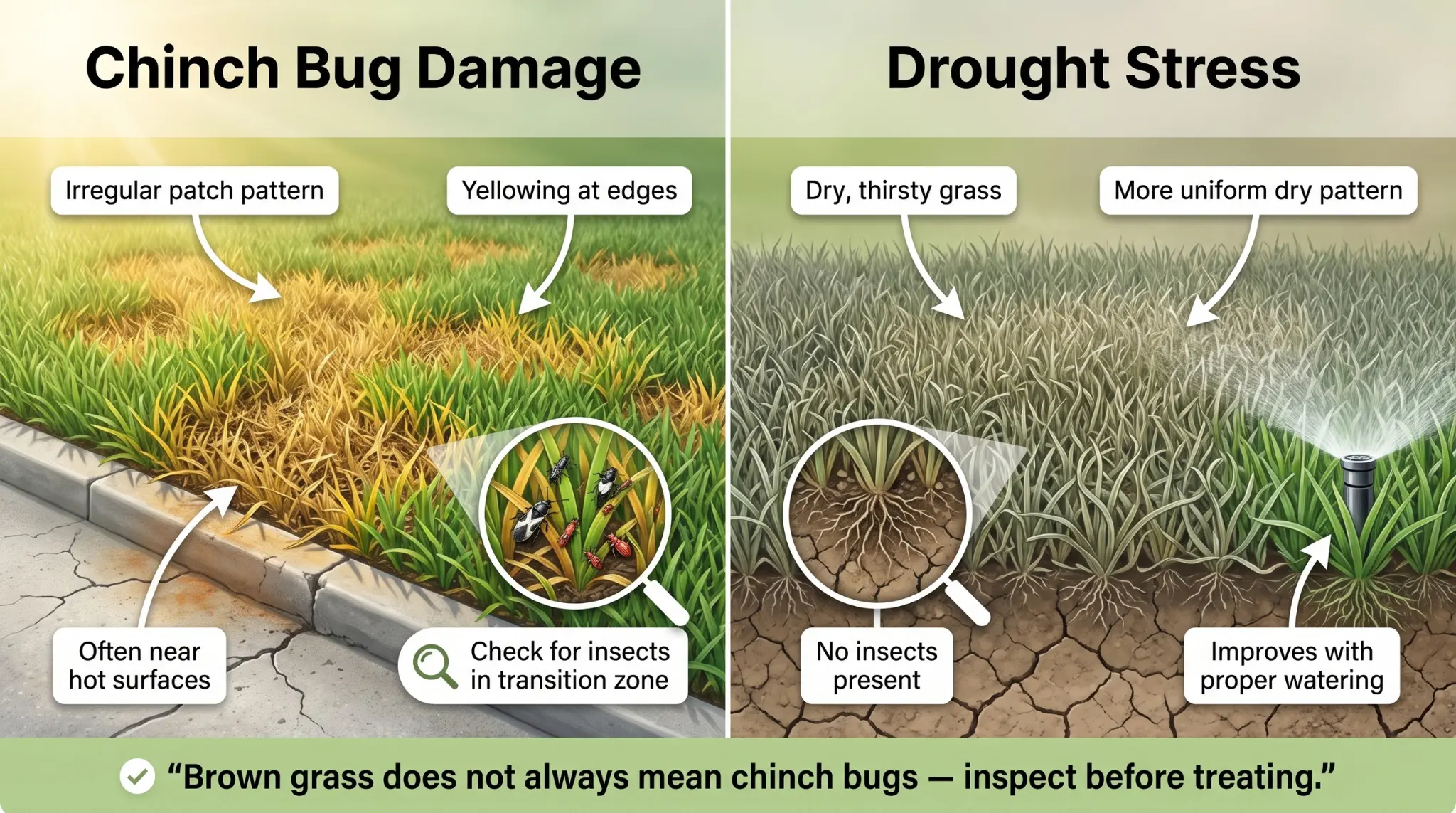
Lawn stress does not create chinch bugs, but stressed St. Augustine can be less able to tolerate their feeding. Texas A&M repeatedly associates severe chinch bug damage with hot, dry conditions and recommends proper irrigation, fertility, mowing, and thatch management as part of integrated pest management.
Heat and drought can amplify visible damage
Chinch bugs are most troublesome during hot, dry weather. At the same time, St. Augustine under drought stress already has less available water and lower resilience.
When insect feeding and drought occur together, yellowing and browning can develop quickly.
Poor irrigation coverage creates weak zones
Dry strips beside driveways, corners that sprinklers miss, and sunny slopes can become repeat stress areas.
Those same hot locations are often where chinch bug damage is first noticed, so an irrigation problem can both mimic and worsen pest injury.
Too much water is not the answer
Constantly wet soil can weaken roots, increase disease risk, and interfere with healthy turf growth. The goal is adequate, even moisture—not saturation.
Use soil condition and irrigation coverage rather than lawn color alone to decide when water is needed.
Excessive nitrogen can work against you
Heavy nitrogen encourages rapid growth and can contribute to thatch. Texas A&M IPM guidance recommends minimum appropriate slow-release nitrogen rather than unnecessary high fertility.
A lush appearance is not automatically a healthier or more pest-resistant lawn.
Thatch can provide protected habitat
Moderate organic material is normal, but excessive thatch can create a protected zone around the lower turf canopy.
Good mowing, irrigation, and fertility practices help limit buildup. Correcting the cause is better than repeatedly relying on aggressive dethatching.
Scalping and mowing stress reduce resilience
Removing too much leaf area during hot weather can add another stress at the same time chinch bugs are feeding.
Keep mowing consistent and appropriate for St. Augustine rather than cutting the lawn extremely short.
Compaction and poor roots complicate diagnosis
A lawn with weak roots or compacted soil may wilt more quickly even without insects. When chinch bugs are also present, the visible symptoms can be more severe than either issue alone.
Check the root zone and soil condition when damage does not respond as expected.
Why stressed turf can make diagnosis harder
Heat stress, drought, chinch bugs, and disease can all produce yellow or brown turf. One problem can mask another.
Use a stepwise diagnosis:
- Check irrigation and soil moisture.
- Inspect the damage pattern.
- Look for chinch bugs at the active edge.
- Examine roots if the turf lifts easily.
- Consider disease when seasonal and tissue symptoms fit.
Stress management is prevention, not proof of control
Improving irrigation or mowing can help the lawn tolerate stress, but cultural care does not instantly remove a damaging chinch bug population.
If the insects are confirmed at damaging levels, use the evidence-based chinch bug treatment framework.
Dallas relevance
North Texas summers can place warm-season lawns under substantial heat and water demand. That makes accurate diagnosis particularly important: the same hot sunny area can show drought stress, irrigation gaps, and chinch bug injury.
Do not use “Dallas heat” as a diagnosis. Use it as a reason to inspect more carefully.
A lower-stress lawn management checklist
- Water according to turf and soil need.
- Correct uneven sprinkler coverage.
- Avoid excessive nitrogen.
- Manage thatch through sound cultural care.
- Mow without scalping.
- Protect beneficial insects by avoiding unnecessary pesticide use.
- Scout early during hot weather.
Related guides
Read chinch bugs vs. drought when water stress is part of the diagnosis and how to prevent severe chinch bug problems for a broader prevention plan.
Stress can change how much damage the same pest population causes
A vigorous lawn may tolerate some feeding that a severely drought-stressed lawn cannot. This is why population counts should be interpreted alongside turf condition rather than in isolation.
Do not “correct” one stress by creating another
Heavy watering to fix drought symptoms can create saturated soil. Heavy fertilizer to fix pale color can create rapid growth and thatch. Aggressive mowing to remove brown tissue can scalp surviving St. Augustine. Make one measured correction at a time.
Watch for stacked problems
A hot dry strip near pavement might have poor sprinkler coverage, chinch bugs, and weakened roots at the same time. If one correction produces only partial improvement, revisit the other factors instead of assuming the first diagnosis was wrong.
Use stress reduction to support recovery
Once active chinch bug pressure is controlled, sound irrigation, mowing, and fertility help living St. Augustine rebuild. Cultural care supports recovery; it does not replace pest control when a damaging population is present.