After treating chinch bugs, monitor the active damage zone rather than immediately trying to repair or retreat the lawn. Texas A&M recommends inspecting treated sites every 3 to 5 days for at least two weeks to determine whether the infestation is under control.
Keep pest control, label compliance, and turf recovery as separate steps.
1. Follow the label after application
Post-application instructions can differ by product. Follow the label for:
- Re-entry by people and pets.
- Irrigation after treatment.
- Mowing restrictions.
- Minimum reapplication intervals.
- Maximum application limits.
Do not use general lawn advice to override those directions.
2. Mark the edge of the damaged area
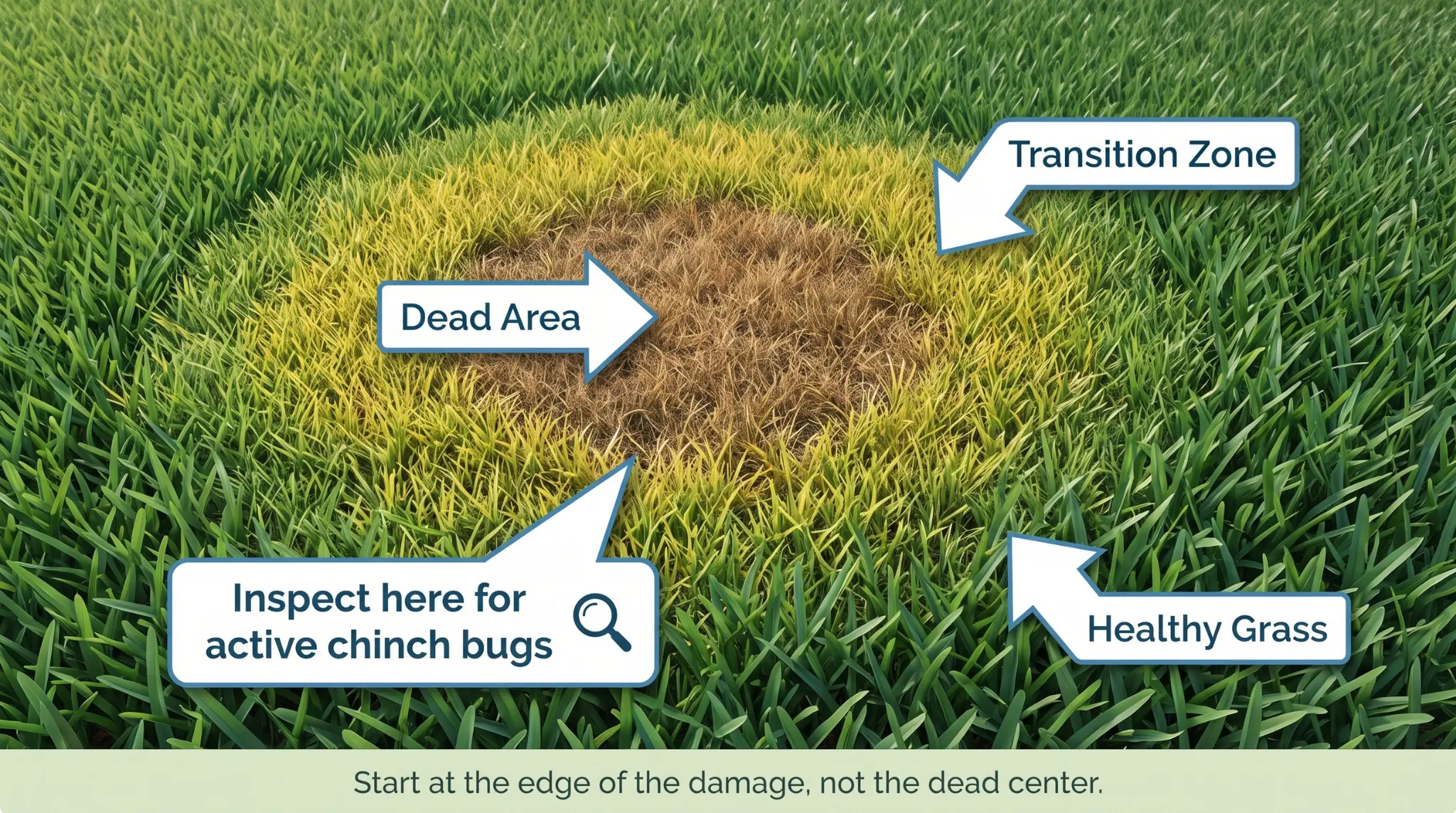
Take a photo or place a small marker at the outer edge of the patch. This makes it easier to see whether the damaged zone is still expanding.
If the boundary remains stable while insect counts drop, control is more likely to be working.
3. Inspect every few days
Texas A&M recommends checks every 3 to 5 days for at least two weeks.
Part the grass at the transition zone or repeat a flotation test when necessary. Look for living adults and nymphs rather than judging only by the old brown area.
4. Do not expect dead grass to turn green
Brown tissue that is already dead will remain brown. A successful treatment prevents additional injury; it does not reverse plant death.
Living yellow or stressed turf may recover if its crowns and stolons remain viable and other growing conditions are adequate.
5. Check irrigation without overwatering
St. Augustine under drought stress needs appropriate moisture, but flooding a damaged lawn is not a recovery strategy.
Make sure sprinkler coverage is even and water according to turf need. Excessive irrigation can create different lawn problems.
6. Avoid a heavy fertilizer response
Do not push damaged St. Augustine with excessive nitrogen. Texas A&M notes that heavy fertility can contribute to thatch, and good cultural management is part of long-term chinch bug prevention.
Use normal seasonal fertility recommendations instead.
7. Delay major repair until active feeding is controlled
Installing new sod while chinch bugs are still active can expose replacement turf to the same problem.
Confirm that:
- The damaged area is no longer expanding.
- Chinch bug numbers have dropped.
- Irrigation coverage is adequate.
- No major disease or root problem is being missed.
8. Decide whether the lawn can recover or needs repair
Small damaged areas may fill from surviving St. Augustine stolons during active growth. Completely dead areas may need patching with sod or plugs.
The extent of living tissue, season, light, water, and soil condition all affect recovery.
9. Record the trouble spot
Chinch bug problems can recur in the same hot, sunny areas. Keep a note or photo of where the infestation occurred so the area can be scouted earlier next season.
What not to do after treatment
- Do not reapply early because the lawn is still brown.
- Do not add extra fertilizer to force color.
- Do not replace sod before confirming control.
- Do not ignore sprinkler problems.
- Do not assume every remaining brown area is still caused by chinch bugs.
When to reassess the original diagnosis
If damage continues despite falling chinch bug numbers, investigate other causes. Drought, uneven irrigation, take-all root rot, large patch, or root-feeding pests can coexist with an insect problem.
Related guides
Use how long chinch bug treatment takes for monitoring expectations and the treatment guide for pre-application decisions.
Keep foot traffic off damaged areas when possible
Severely stressed St. Augustine has less leaf and root capacity to tolerate additional wear. Limiting unnecessary traffic while the lawn stabilizes can prevent extra physical damage, especially where stolons are already weak.
Do not remove all brown material immediately
Raking or aggressive dethatching right after treatment can disturb living runners mixed into the damaged area. First determine what tissue is alive and whether excessive thatch is actually present.
Check the same locations you sampled before treatment
Returning to the original sampling points makes the follow-up more meaningful. Compare insect activity and the edge of damage rather than choosing a completely different area each time.
Separate “pest under control” from “lawn repaired”
These are two milestones. Pest control comes first. Once the damage edge is stable and active insects are no longer at damaging levels, the lawn can be evaluated for natural fill-in, plugs, or sod.