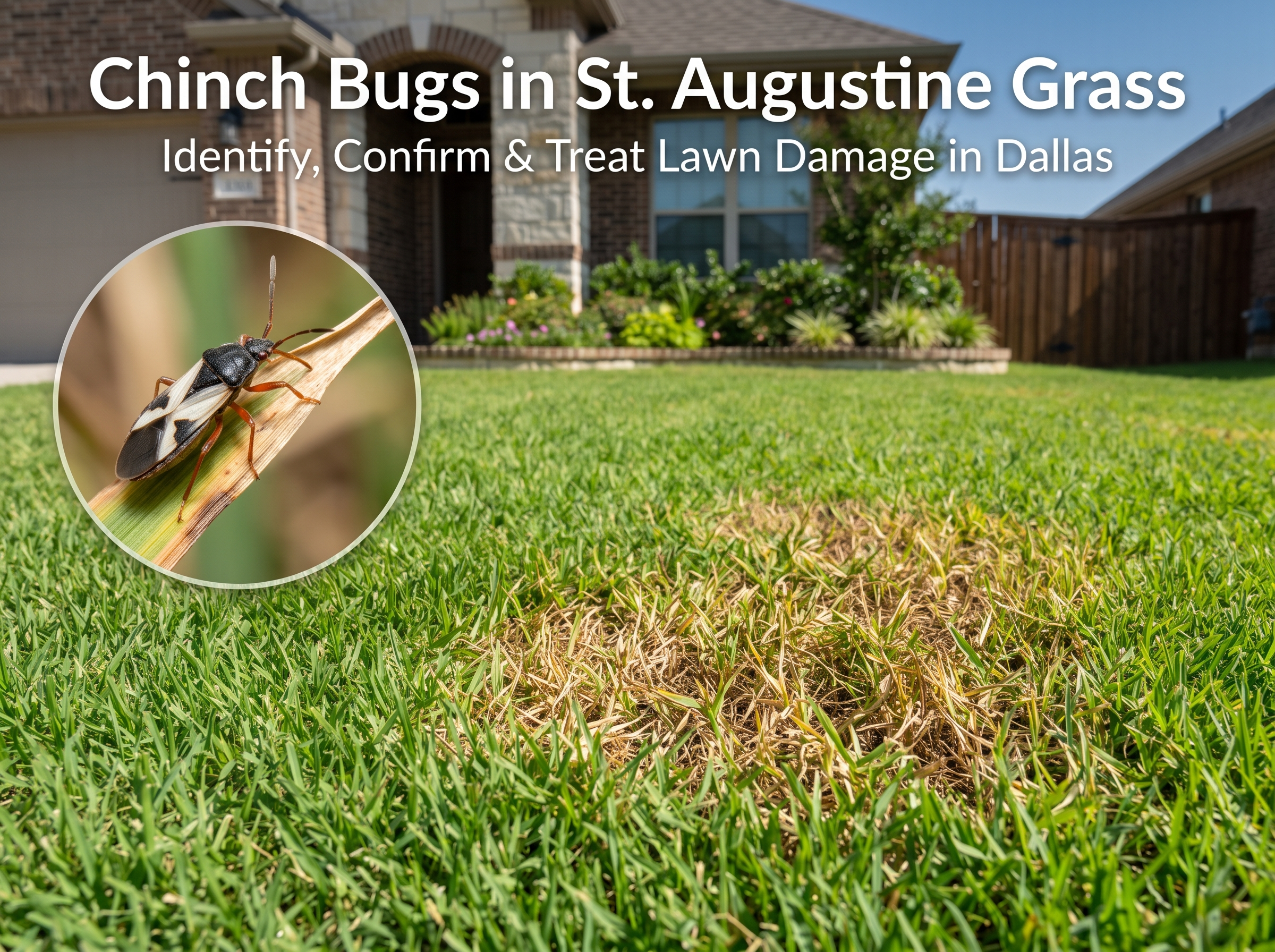
Chinch bug treatment should begin only after the pest is confirmed in an actively damaged area. Texas A&M recommends considering treatment when visible damage is present and chinch bugs are detected around the damaged edge. A brown lawn by itself is not enough evidence.
The safest homeowner approach is diagnosis first, the smallest necessary treatment area second, and the current product label as the controlling instruction.
Step 1: Confirm chinch bugs before treating
Before buying or applying an insecticide, check the transition zone between healthy and damaged grass. Part the turf or use a flotation test to find adults and nymphs.
If you cannot confirm the insects, investigate drought, sprinkler coverage, large patch, take-all root rot, grubs, or other causes instead.
Use the chinch bug testing guide if sampling is the uncertain step.
Step 2: Decide whether the population is associated with active damage
Finding one insect does not mean the entire lawn needs treatment. Extension recommendations use active injury and population levels to guide decisions.
Texas A&M’s St. Augustine guidance cites about 25 chinch bugs per square foot as a treatment threshold. The exact interpretation depends on the sampling method.
Step 3: Treat only the area that needs it when possible
Texas A&M recommends spot treatment when chinch bugs are restricted to isolated parts of a lawn. This can reduce pesticide use and limit effects on beneficial insects.
A spot treatment should cover the off-color turf and the surrounding infested area identified by scouting. Do not automatically treat unrelated healthy turf.
Step 4: Read the label before choosing how to apply
Pesticide formulations differ. Some products are liquids, some are granules, and label directions for irrigation, protective equipment, re-entry, and disposal are not interchangeable.
The label tells you:
- Whether the product is labeled for chinch bugs.
- Whether it is labeled for residential turf.
- The application rate.
- How and when to irrigate.
- Required protective clothing or equipment.
- When people and pets may re-enter the area.
- How to store and dispose of the product.
Do not substitute a blog article for those instructions.
Why irrigation directions can differ
Texas A&M notes that watering practices can differ between liquid and granular formulations. A product label may direct irrigation before, after, or not immediately after application depending on how the product is intended to work.
That is why generic advice such as “always water it in” is unsafe.
Protect sidewalks, gutters, and storm drains
Keep pesticide granules and spray where the label allows. Texas A&M advises sweeping granules that land on sidewalks or driveways back onto the treatment area rather than allowing them to wash into storm drains.
Avoid applying when conditions would carry material away from the target area.
What about children and pets?
Follow the product label’s re-entry directions exactly. Texas A&M also emphasizes keeping treated areas off-limits until label requirements are met and the application is dry when the label calls for drying.
Store pesticides in their original labeled containers and out of reach.
What if the first treatment does not seem to work?
Do not immediately apply more product. Texas A&M recommends inspecting treated sites every 3 to 5 days for at least two weeks to determine whether the infestation is under control.
If live chinch bugs remain, check:
- Whether the insect was identified correctly.
- Whether the application covered the active area.
- Whether the product label allows another application.
- Whether the timing and irrigation followed the label.
- Whether the brown grass is old damage rather than ongoing feeding.
Why the lawn may stay brown after successful control
An insecticide can stop further feeding, but it cannot instantly restore dead plant tissue. The correct measure of control is reduced active pest pressure and no continued expansion—not immediate green color.
Recovery depends on how much living St. Augustine remains.
Nonchemical management still matters
Good mowing, irrigation, fertility, and thatch management can reduce turf stress and lower the risk of severe chinch bug problems. Repeated broad insecticide use can also reduce beneficial insects.
Treatment should be one part of management, not the entire lawn-care plan.
When professional diagnosis may be useful
If pest identification is uncertain, damage is extensive, or label instructions are difficult to interpret, an independent extension resource or qualified pesticide professional can help with diagnosis and treatment decisions.
This site does not provide pesticide application services.
Key takeaway
Confirm chinch bugs, treat only where justified, follow the current label, protect non-target areas, and monitor the site afterward. Treatment is successful when active chinch bug pressure is controlled—not when dead grass turns green overnight.
Common treatment mistakes to avoid
- Treating the entire lawn without mapping the infestation: localized damage may not justify blanket treatment.
- Using the wrong pest diagnosis: insecticide cannot fix drought, disease, or irrigation failure.
- Ignoring the formulation: liquid and granular labels may require different watering practices.
- Reapplying because the grass is still brown: old damage can remain after control.
- Mixing products or rates from memory: the current label controls.
What to record before and after treatment
Take photos of the damage edge, note where chinch bugs were found, and record the product and application date exactly as used. This gives you a baseline for the 3-to-5-day follow-up inspections Texas A&M recommends.
Why “stronger” is not automatically better
Using more product than the label allows is unsafe and illegal. Even within labeled use, broad repeated applications can reduce beneficial insects. The goal is enough control to stop damaging pest activity while limiting unnecessary exposure.