
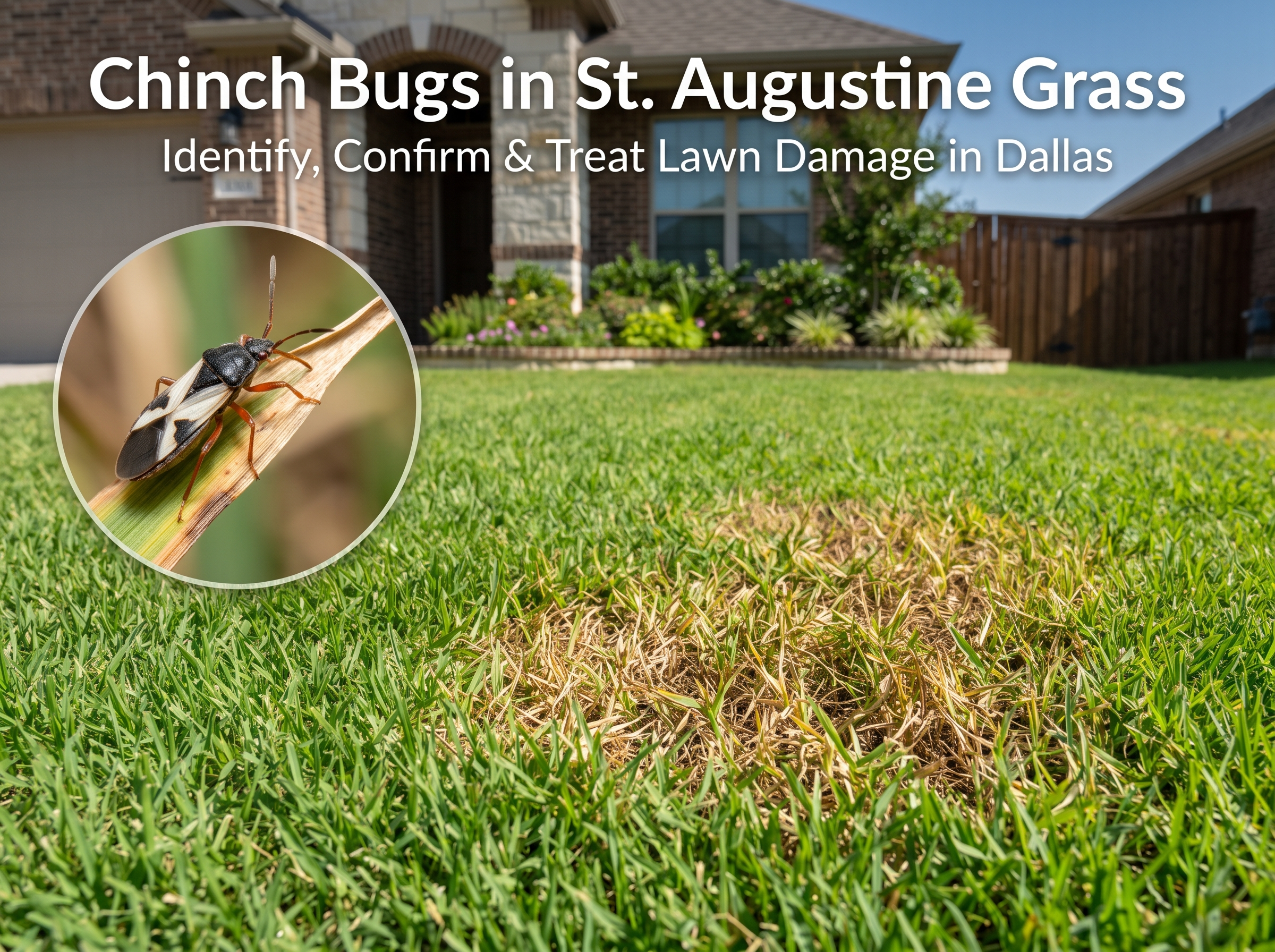
There is no single number of hours or days that applies to every chinch bug treatment. Product formulation, active ingredient, application conditions, pest stage, and label directions all matter. Texas A&M recommends inspecting a treated site every 3 to 5 days for at least two weeks to determine whether the infestation is under control.
The important question is not “when will the lawn look green?” but “has active chinch bug pressure stopped?”
Why treatment speed varies
Different pesticide products work in different ways. Labels may also specify different irrigation directions and application methods.
Results can be affected by:
- Whether the pest was identified correctly.
- How well the active infestation area was covered.
- Whether the label directions were followed.
- The product formulation.
- Whether both nymphs and adults are present.
- Whether the lawn is also suffering from drought or disease.
What to monitor during the first two weeks
Texas A&M’s homeowner guidance recommends inspecting treated sites every 3 to 5 days for at least two weeks.
At each check, look for:
- Live chinch bugs in the transition zone.
- New yellowing beyond the previous damage edge.
- Continued expansion of the brown patch.
- Whether the turf outside the original injury remains stable.
Do not use lawn color as the only measure
Dead grass cannot become green again. Even stressed living tissue may take time to recover.
A treatment can control active insects while the original brown patch remains visible. Judge control by insect activity and whether damage continues to spread.
What if chinch bugs are still visible?
Finding a live insect shortly after application does not automatically justify an immediate second treatment. Check the product label for reapplication intervals and use limits.
If a damaging population remains during the monitoring period, confirm:
- The insects are actually chinch bugs.
- The treated area included the active edge.
- Application and irrigation matched the label.
- The label allows another application.
What if the patch keeps getting bigger?
Continued expansion can mean active chinch bugs remain, but it can also indicate that the original diagnosis was incomplete.
Recheck soil moisture, irrigation coverage, disease symptoms, and root condition. More pesticide is not the answer if another problem is driving the decline.
What if the bugs are gone but the grass is still brown?
That can be normal. Once leaf tissue and stolons are dead, pest control stops further injury but does not restore dead plants.
The next step becomes recovery: protect living turf, correct water or fertility stress, and decide whether bare areas need time to fill or repair with sod.
Can you speed up recovery with extra fertilizer?
Do not respond to chinch bug damage with heavy nitrogen. Texas A&M notes that excessive nitrogen can contribute to thatch and conditions that favor chinch bug problems.
Follow St. Augustine fertility recommendations rather than trying to force rapid green-up.
Why label timing is more important than a blog timeline
A pesticide label contains product-specific directions for application interval, irrigation, re-entry, and maximum use. Those instructions take priority over general educational guidance.
Never shorten a reapplication interval because the lawn still looks damaged.
A practical post-treatment timeline
- Day 0: Apply only as the label directs.
- Every 3–5 days: Inspect the active edge for living chinch bugs and new damage.
- Through at least two weeks: Determine whether the infestation is under control.
- After control is established: Shift attention to turf recovery and prevention.
This is a monitoring framework from extension guidance, not a promise that every product kills every insect within a specific number of days.
Related guides
Read chinch bug treatment basics before applying anything, and use when to treat chinch bugs if the decision itself is uncertain.
Why product claims and lawn recovery are different timelines
A pesticide may begin affecting insects before the lawn shows any visual improvement. Conversely, a brown patch can remain unchanged even after the pest population has fallen. Keep the product-control timeline separate from the plant-recovery timeline.
What counts as improvement?
Improvement can mean fewer live chinch bugs, a stable damage edge, and no new yellowing outside the original patch. New green growth is helpful but is not required to prove that pest pressure has declined.
When to ask whether the original diagnosis was wrong
If chinch bug counts are low but damage continues to spread, recheck drought, irrigation, root disease, and other pests. Treatment failure is not the only explanation for continuing symptoms.
Do not compare one product’s timeline with another
Formulations and active ingredients differ, and labels can change. A statement from a different product, an old label, or a neighbor’s experience should not be used to set your own reapplication schedule.