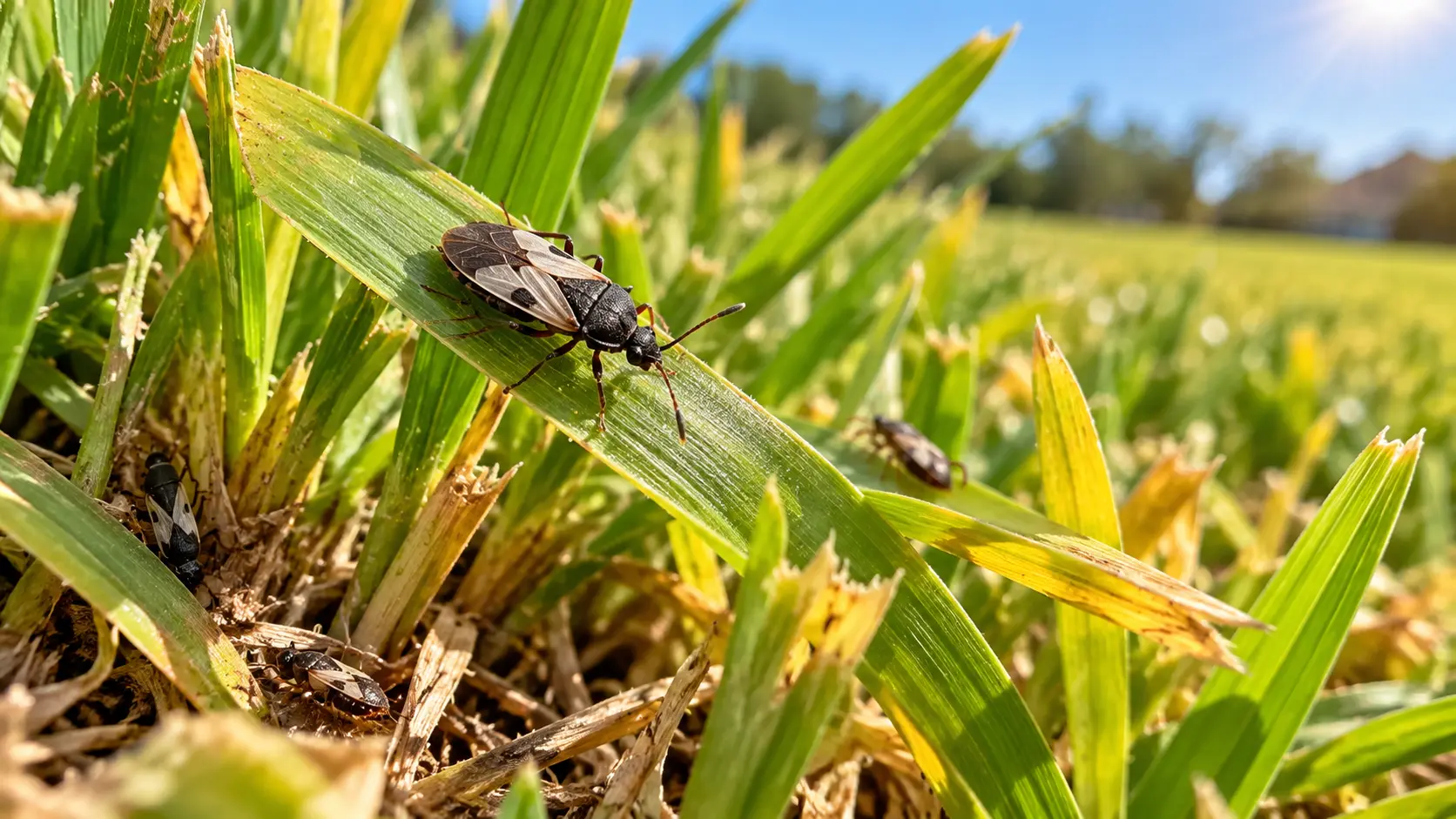
Southern chinch bugs are most active and damaging during warm weather, especially when conditions are hot and dry. Texas A&M specifically highlights July and August as a common problem period for St. Augustine grass, but the exact timing varies with weather and local conditions.
The calendar is useful for knowing when to scout. It is not enough to diagnose an infestation by itself.
Why warm weather matters
Chinch bugs are insects whose development and feeding increase during warm conditions. Texas A&M notes that nymphs and adults are commonly found together during the warmer months.
Hot, dry weather also stresses St. Augustine, which can make feeding damage more visible and more severe.
Texas timing: when should you pay closer attention?
Texas A&M’s St. Augustinegrass management calendar places chinch bug scouting across the warm growing season. Landscape IPM guidance emphasizes hot, dry summer conditions.
For Dallas-area homeowners, a practical approach is to increase scouting when:
- St. Augustine is actively growing.
- Daytime heat is persistent.
- Rainfall is limited or irrigation stress is showing.
- Sunny lawn edges begin to yellow.
- A previously affected area starts showing similar symptoms again.
Are July and August always the worst months?
They are common high-risk months in Texas guidance, but weather does not follow the same schedule every year. A hot, dry period can begin earlier or continue later.
Use July and August as a reminder to scout—not as a rule that chinch bugs cannot be active outside those months.
What happens in spring?
Adults survive the colder season and become active as conditions warm. Population buildup takes time, so early-season monitoring can be useful in lawns with a history of chinch bug damage.
Spring symptoms should still be diagnosed carefully because large patch, take-all root rot, and other St. Augustine problems may also be active during cooler or transitional weather.
What happens during summer?
Summer is when chinch bug injury is most likely to become obvious in Texas St. Augustine. Extension descriptions repeatedly associate severe damage with sunny turf under hot, dry conditions.
Watch for:
- Small irregular yellow areas becoming brown.
- Damage expanding near pavement.
- Wilted turf that does not match the sprinkler pattern.
- Adults and nymphs at the active edge.
If symptoms appear, inspect rather than waiting for the patch to become fully dead.
What about fall?
Warm conditions can continue into fall, so activity does not stop on a fixed date. As temperatures decline, the seasonal pattern changes and adult chinch bugs eventually enter the overwintering period.
At the same time, fall is an important season for large patch disease in warm-season turf, so brown St. Augustine late in the year should not automatically be labeled chinch bug damage.
Are chinch bugs active in winter?
Texas A&M states that winter is generally spent in the adult stage unless weather permits year-round reproduction. For North Texas, visible warm-season turf growth and chinch bug feeding are much lower priorities during the coldest part of winter.
Brown dormant St. Augustine is normal and should not be confused with active summer-type chinch bug damage.
Weather matters more than the calendar
A useful seasonal diagnosis asks:
- Is the turf actively growing?
- Has the weather been hot and dry?
- Is the damaged location sunny?
- Are chinch bugs actually present?
The more those factors line up, the more relevant chinch bug scouting becomes.
When is the best time of day to look?
Warm, sunny conditions can make moving adults and nymphs easier to see in the turf. But the most important factor is sampling the correct location—damaged-but-not-dead grass around an active edge.
If insects are difficult to see, use a flotation test instead of relying on time of day.
Should you treat on a seasonal schedule?
No. A seasonal risk period is not the same thing as a treatment schedule. Texas A&M recommends treatment decisions based on damage symptoms plus confirmed chinch bugs, not the calendar alone.
Routine insecticide applications without evidence can harm beneficial insects and may not address the real cause of brown turf.
A simple Dallas scouting rhythm
For St. Augustine lawns with a history of chinch bugs:
- Know the previous trouble spots.
- Begin watching those areas as warm-season growth strengthens.
- Increase inspection during sustained summer heat.
- Check early yellowing before large dead areas form.
- Use direct insect inspection or a flotation test to confirm.
Related guides
Use where chinch bugs live in the lawn to choose scouting locations and how to test for chinch bugs when visual inspection is uncertain.
How often should you scout during the risk period?
Texas A&M homeowner guidance recommends frequent inspection in lawns with a history of chinch bug problems. A weekly look at known trouble spots during warm weather is more useful than waiting for the entire lawn to change color.
Scouting does not need to be complicated. Walk the same sunny edges, note new yellowing, and part the turf where symptoms begin. If the lawn remains healthy, no treatment decision is needed.
Why seasonal timing should not create false certainty
A hot August afternoon can support chinch bug activity, but it can also expose drought stress and irrigation gaps. Likewise, a brown lawn in cooler weather may reflect dormancy or disease. Seasonal timing narrows the possibilities; it never replaces insect confirmation.
Keep a simple lawn history
If one section has had confirmed chinch bugs before, record the location and approximate time of year. That history can help you scout earlier in future seasons without turning the whole lawn into a preventive-treatment zone.